When your scope is clear, your pillars begin to take shape. They’re the strong points of your site, the places where your purpose gathers and your knowledge stands tall. Each pillar holds a part of your world, Home, Content, Contact, the Isle of Wight, Roman History, and together they form the structure that both readers and the Google bot can understand. Around them, smaller paths begin to appear: the cluster posts that explore the details, the stories, the questions, the quiet corners that give your site depth. When your pillars are steady, your blog stops being a collection of posts. It becomes a place with architecture, rhythm, and a sense of belonging.
Limentinus
Outline Core Topics and Pillar Content
Why Pillars Matter Once Your Scope Is Set
This article is part of the “Building a WordPress Site” category and the “WordPress How‑To” tag. It forms one part of a structured, procedural guide explaining how to create, organise, and maintain a WordPress website.
Planning a WordPress site: A man sits at a terminal planning his site
When your scope is clear, the next step is to sketch the early architecture of your blog. This isn’t just about the big evergreen topics you’ll return to.
It’s also about the structural pillars that every site needs: the Home page that welcomes people in, the About page that explains who you are, the Contact page that opens the door for conversation, and the core content pillars that hold the weight of your niche. Together, these elements form the first outline of your little country.
People call the main topics pillars, but they’re really the major landmarks of your territory, the places that define its character. Around each one, smaller paths begin to form. These are the cluster posts, the detailed explorations that grow naturally from the main idea. They’re the stories, the guides, the explanations, the quiet pieces of knowledge that give your site depth and texture.
You don’t need to write these pillars yet. You only need to know what they are. Five to seven is usually enough. Think of them as the rooms of a house you haven’t built but can already walk through in your mind. The Home page is the front door. The About page is the hallway where you introduce yourself. The Contact page is the open window that lets people speak back, and the content pillars are the rooms where the real life of the house happens.
If your scope is steady, these pillars will feel obvious. They’ll reflect the heart of your niche, the things you know well enough to teach, explain, or explore with confidence. They’ll sit comfortably inside the borders you’ve drawn, and they’ll give the Google bot a clear sense of what kind of place it’s walking into. The bot doesn’t need perfection. It needs shape. It needs to see that your site has a centre, a purpose, and a structure that makes sense. Your blog must have a ‘home page’ and without a home page nothing is indexable and it can’t appear on Google.
Once those pillars are named, the clusters will follow. They always do. And that’s when your little country begins to feel like a world.
How Pillars and Clusters Bring Your Scope to Life
An image showing a ‘Pillar’ and a cluster of surrounding/attached articles in a classic pillar and cluster formation.
What makes the pillar and cluster model so powerful is that it turns your scope into something the reader can navigate and the Google bot can understand. A pillar gathers the broad, high‑level knowledge. A cluster gathers the finer details. Together, they create a shape that feels natural to a human reader and beautifully logical to the bot.
The bot likes this kind of structure. It sees a pillar as a central point of understanding, a place where a broad question is answered with clarity. It sees the clusters as the deeper explorations that give the topic weight and context. When the bot can follow these paths easily, it begins to understand your authority. It sees that you’re not dabbling. You’re building something with depth.
How the Bot Reads a Well‑Built Pillar
The bot also moves through your site more efficiently when your pillars and clusters are linked. Internal links act like well‑lit roads. They guide the bot from one idea to the next, helping it crawl and index your pages without confusion. Link equity flows naturally, strengthening the whole network, and because the clusters surround the pillar with context, the bot can rank your content more accurately. It no longer sees isolated posts. It sees a coherent body of knowledge.
For readers, the experience is just as smooth. A pillar gives them the broad view. A cluster lets them wander deeper. They stay longer, they read more, and the bot notices that behaviour. It interprets it as a sign of value.
Why Pillars Make Your Writing Life Easier
There’s another quiet benefit. Once your pillars are in place, your content planning becomes easier. Each pillar naturally suggests a dozen smaller posts. You’re no longer staring at a blank page. You’re tending a structure that grows in a steady, organised way. Your archive stays coherent. Your purpose stays visible. Your site becomes a place that feels intentional rather than accidental.
This model also helps modern search engines, including AI‑driven ones, understand your work as a trustworthy source. When your content is linked, contextual, and clearly structured, it’s easier for these systems to retrieve it, cite it, and present it as part of an answer. You’re not just writing posts. You’re building a reference.
Sketching Your Own Pillars
An image showing the pillars found on the Limentinus.co.uk blog site used as an example of pillar and cluster
So take a moment and sketch your pillars. Let your scope guide you. Under each pillar, jot down the smaller topics that naturally belong there. Don’t force it. Let the structure emerge. When your pillars reflect your scope and your clusters reflect your pillars, the whole site begins to feel like a world with shape and depth.
The Google bot, breathing slowly as it always does, will see that shape. It’ll take its time, sometimes weeks, sometimes months, but it’ll understand what you’re building. It’ll see the clarity, the coherence, the quiet confidence of a writer who knows their territory.
The Quiet Truth
Pillars are the architecture. Clusters are the paths. Together, they turn your blog into a place worth exploring, for readers and for the little bot that guides them to your door.
Before you build your site, decide the borders of your little country. A clear scope tells your reader what you stand for and helps the Google bot understand where your work belongs. The bot can’t be hurried. It watches slowly, sometimes for weeks, sometimes for months, breathing over your posts as it tests how readers respond. When your scope is steady and your purpose is clear, the bot can map your world with confidence, and your blog becomes a place that stands out rather than a collection of scattered thoughts
Limentinus
Set a Clear Scope
This article is part of the “Building a WordPress Site” category and the “WordPress How‑To” tag. It forms one part of a structured, procedural guide explaining how to create, organise, and maintain a WordPress website.
Planning a WordPress site. A man sits at a terminal planning his site
Before you build a site, before you choose a theme or sketch a content calendar, you need to decide the borders of your little country. Scope is the shape of your blog’s world. It’s the territory you claim, the ground you stand on, and the promise you make to your reader.
Too broad, and you’ll drift. Too narrow, and you’ll run out of things to say. A clear scope is the balance between the two, and it’s one of the strongest signals you can give to the Google bot as it tries to understand what your site is about.
Scope isn’t about limiting yourself. It’s about choosing a focus you can genuinely master. A blog with a clear scope feels confident, intentional, and rooted in real experience. A blog without one feels like a wandering diary, and the bot doesn’t know where to place it.
Choose a niche you can genuinely inhabit
The strongest scopes come from lived experience. Google rewards demonstrated experience and expertise, and it’s very good at recognising when a writer knows what they’re talking about. If you’ve walked the Isle of Wight for years, or spent a lifetime reading local history, or built a quiet archive of stories and places, that’s a niche you can inhabit with ease. If you’ve cooked for decades, or restored old tools, or studied a craft, that’s a niche with depth.
A niche isn’t a trap. It’s a home. It’s the place where your knowledge feels natural and your voice feels steady. When you choose a niche you can genuinely master, you’re not narrowing your world. You’re giving your reader something solid to trust.
Validate that people actually want what you plan to write
Scope isn’t just about what you know. It’s also about what people need. Before you commit to a niche, spend a little time listening. Look at the questions people ask. Look at the gaps in the information that already exists. Look at the things that frustrate beginners, or confuse enthusiasts, or leave locals wondering about the stories beneath their feet.
This isn’t market research in the corporate sense. It’s simply paying attention. When you understand what people are searching for, you can shape your scope around real needs, and the Google bot, which is always trying to match questions to answers, will recognise that your content satisfies clear search intent. That’s one of the strongest people‑first signals you can send.
Define a core purpose that sits at the heart of your scope
Your scope and your purpose are partners. Purpose is the reason your site exists. Scope is the territory where that purpose plays out. When you define your purpose clearly, your scope becomes easier to draw.
If your purpose is to help visitors understand the history of a place, then your scope might be local stories, walking routes, and cultural context. If your purpose is to help beginners learn a craft, then your scope might be foundational skills, simple projects, and practical guidance. If your purpose is to help readers think more deeply about a subject, then your scope might be essays, reflections, and curated knowledge.
A clear purpose reduces the risk of creating content that feels like it was written for search engines rather than people. It keeps your writing grounded in intention, and the bot recognises that.
Build a topical cluster that gives your scope depth
Once you’ve chosen your niche, sketch the subtopics that naturally sit beneath it. These are the clusters that give your site structure and depth. They’re the pillars and supporting posts that show the bot you’re not dabbling. You’re building something with layers.
If your niche is local history, your clusters might be walking routes, archival stories, old maps, and place‑based essays. If your niche is home cooking, your clusters might be pantry basics, simple techniques, seasonal recipes, and kitchen tools. If your niche is WordPress guidance, your clusters might be structure, SEO, writing rhythm, and site maintenance.
Clusters of articles show the bot that you’re developing topical depth. They help it understand that your site isn’t a collection of random posts. It’s a coherent body of knowledge.
Show your credentials, even if they’re quiet ones
Google pays attention to E E A T, which stands for experience, expertise, authoritativeness, and trust. You don’t need formal qualifications to demonstrate these. You just need to show your reader who you are and why you care about the subject.
A short author bio, a page that explains your background, a note about your connection to the place or craft or topic, all help the bot understand that you’re a real person with real knowledge. If you’ve published elsewhere, include it. If you’ve studied something, mention it. If you’ve lived the subject for years, say so. Quiet authority is still authority.
Cite reputable sources when they strengthen your work
A clear scope doesn’t mean you’re writing in isolation. When you draw on history, research, or technical knowledge, cite your sources. Link to reputable references. Show your reader where your information comes from. This isn’t academic formality. It’s trust building. Wikipedia isn’t always the strongest ‘trust signal’ for the bot, consider other sources.
The Google bot notices when you link to high authority sources. It sees that you’re grounding your work in reliable information. That’s a trust signal, and trust is one of the foundations of visibility.
Keep your scope fresh by tending your archive
A scope isn’t something you define once and forget. It’s something you maintain. As your site grows, older posts will need updating. Information changes. Links break. Your understanding deepens. When you refresh your archive, you’re not just improving your site for readers. You’re signalling to the bot that your content is alive, accurate, and cared for.
Freshness isn’t about constant posting. It’s about reliability. A well tended archive is one of the strongest page experience signals you can give.
Avoid the temptation to sprawl
When your site begins to grow, you’ll feel the pull to write about everything. Resist it. Unrelated topics dilute your scope and confuse the bot. Thin, unfocused pages can trigger search engine first signals, and that’s the opposite of what you want.
Your scope is a promise. Keep it.
Use structured data to help the bot understand your world
Structured data is a quiet, technical way of helping the bot read your site. Author schema, organisation schema, FAQ schema, all give the bot clear signals about who you are, what your site contains, and how your content fits together. You don’t need to become a developer to use it. Many WordPress tools handle it for you. What matters is that you understand why it helps.
Structured data is like giving the bot a clean map of your territory.
Monitor your reputation and listen to your readers
Your scope isn’t just shaped by what you write. It’s shaped by how people respond. Pay attention to comments, mentions, and feedback. A positive reputation reinforces your authority. It tells the bot that your work is trusted, appreciated, and shared.
Reputation isn’t built overnight. The bot takes its time. It breathes slowly, watching how your site settles into the web. Patience is part of the craft.
The quiet truth
A clear scope is one of the strongest foundations you can give your blog.
It tells your reader what to expect and it tells the Google bot what you’re building. It keeps your writing focused, your archive coherent, and your purpose steady. When your scope is well drawn, visibility stops being luck. It becomes the natural result of clarity, care, and the quiet confidence of a writer who knows exactly what their little country contains.
This is where pillars and clusters come in. They’re the practical expression of your scope. Your pillars are the major landmarks inside your chosen territory, the big subjects that define what your blog is about. Your clusters of articles and essays are the smaller paths, stories, guides, and explanations that gather around each pillar. Together, they show the bot that your scope isn’t just an idea. It’s a structure. It’s a world with shape and depth.
A clear scope tells the bot what country you’re building. Pillars and clusters show it the cities, the roads, and the lived‑in places within that country. When the two align, the bot can map your work with confidence, and your readers can settle into a site that feels intentional, coherent, and genuinely worth returning to.
Every blogger reaches a point where they realise they’ve built the house before laying the foundations. Pages scattered, categories improvised, plugins piled on like furniture in the wrong rooms. It’s a familiar moment, but it’s also the point where you pause, breathe, and rethink the map. If you were starting again, you’d begin with structure, not decoration. You’d sketch the pillars first, choose the tone, plan the paths, and let the site grow from intention rather than accident. This section is your chance to step back and do exactly that, to start from the place you wish you’d begun.
Limentinus
Plan Your Site Structure Early
Before You Touch WordPress
Planning a WordPress site: A man sits at a terminal planning his site
Before you open WordPress, pause. A good site doesn’t begin with a theme or a plugin; it begins with a plan. Structure is the quiet skeleton beneath everything else — the way pages connect, the way categories breathe, the way the reader moves through your world. When you plan early, you save yourself months of rearranging later. The Google bot notices this too. It sees a site that’s coherent from the start, not one patched together after the fact.
Begin by sketching your primary pages. Every site needs a few pillars that hold the weight: Home, About, Contact, and Resources. These are the architectural supports, the rooms of the house. Around them, your content pillars will grow — the subjects that define your niche, the themes that give your writing shape. When you know where each piece belongs, the whole structure feels inevitable.
Choosing a Theme That Matches Your Intent
Once the map is clear, choose a theme that fits your design goals. Lightweight, well‑coded, and responsive — those are the quiet virtues that matter more than visual fireworks. Heavy themes with endless animations and oversized scripts slow everything down. They look impressive for a moment, then frustrate readers and confuse the bot. A clean theme loads fast, keeps the focus on your words, and gives you room to grow.
If you plan to customise, create a child theme. It’s a small act of foresight that protects your work from future updates. The bot doesn’t care about your CSS, but your sanity will.
Plugins: Less Is More
Install only what you need. A few essential plugins — SEO, analytics, security, caching, are enough to begin. Each additional plugin adds weight, complexity, and potential conflict. Think of them as furniture in a small room. Too many pieces make it hard to move. Add more later, when you know exactly what purpose they serve. The bot prefers simplicity. It crawls faster, indexes cleaner, and ranks more confidently when the site isn’t cluttered with unnecessary code.
Security and Stability
Before you publish a single post, configure basic security. Install a reliable plugin, enable two‑factor authentication, and set up daily automated backups. These are the quiet routines that keep your site safe. They don’t change how the page looks, but they protect everything you’ve built. The bot doesn’t see them, but your readers will feel the stability in the way the site behaves — no broken links, no downtime, no sudden errors.
Optimising Media Before Upload
Images are beautiful, but they’re heavy. Optimise them before you upload. Compress, resize, and serve them in next‑generation formats like WebP or AVIF. A 40 KB image loads in a blink; a 400 KB one drags the whole page down.
The bot measures this. It notices speed, bounce rate, and user satisfaction. When your pages load quickly, it rewards you quietly.
Implement lazy loading for images and iframes so they appear only when needed. It’s a small technical choice that makes a big difference. Readers see smooth scrolling; the bot sees efficiency.
Caching and Performance
Enable a caching plugin such as WP Rocket or W3 Total Cache. These tools create static versions of your pages so they can be served instantly. Minify and combine CSS and JavaScript files, and defer non‑critical scripts.
The result is a site that feels light and responsive. The bot interprets this as quality. It doesn’t understand beauty, but it understands speed.
Use a content delivery network (CDN) to serve static assets from servers close to your visitors. It shortens the distance between your content and your reader. The bot sees global reach; the reader feels immediacy.
Database Care and Clean‑Up
Behind the scenes, your database holds everything, posts, revisions, transients, tables. Over time, it fills with clutter. Schedule regular clean‑ups. Remove unused data, optimise tables, and keep the structure lean. A tidy database is invisible to readers but vital to performance.
The bot crawls faster when the server responds quickly. It’s another quiet signal of professionalism.
Remember to download your file contents from time to time as aback-up. Log in to your WordPress dashboard Go to Tools → Export. All Content Download Export File WordPress will give you an .xml file and store it safely.
Testing and Refinement
After each change, test your site speed. Use tools like Google PageSpeed Insights or GTmetrix. They’ll show you where the bottlenecks hide, oversized images, unminified scripts, slow server responses. Address regressions promptly.
The bot revisits your site often; it notices improvement. A site that gets faster over time earns quiet respect.
Avoid Early Over‑Customization
Resist the urge to tamper with core files or install heavy visual builders before you need them. Early customisation often leads to later headaches. Keep your foundation clean. Build your content first; design can evolve later.
The bot doesn’t care about gradients or parallax effects. It cares about structure, clarity, and speed.
Thinking of Pillars as Core Features
The conventional pillars seen in Limentinus as an example
Your pillars aren’t just topics; they’re functional parts of the site. Home is the entrance, Aboutis the introduction, Contact is the conversation, Content is the library.
Each one deserves its own space and purpose. When these pages are clear and well‑linked, the bot understands your hierarchy.
It sees a site with order, not chaos. Readers feel the same. They move easily, find what they need, and stay longer.
Hosting and Foundations
Choose a fast, reputable hosting provider with solid server‑side caching. Cheap hosting may save money but costs performance. A good host keeps your site stable, secure, and quick to respond. The bot notices uptime and speed.
It ranks reliability higher than decoration.
The Quiet Architecture Beneath Everything
Planning your structure early is like laying the foundations of a house before choosing the paint. It’s invisible once built, but everything depends on it. When your pages, categories, and technical settings are mapped out before WordPress even opens, your site grows naturally. You won’t need to rebuild later; you’ll simply expand.
The Google bot moves through your site like a careful visitor. It follows links, measures speed, and senses coherence. When it finds a structure that makes sense, it stays longer, indexes deeper, and returns more often. Readers do the same.
They feel the calm of a site that knows where everything belongs.
The Quiet Reward
There’s a point in building a blog where you realise that simplicity isn’t just an aesthetic choice; it’s a structural one. The more you strip away, the clearer everything becomes, for you, for your readers, and for the little Google bot that wanders through your pages, taking notes in its quiet, methodical way. A simple site is easier to understand. It’s easier to crawl. It’s easier to trust.
Simplicity keeps the mess low. It stops your categories from sprawling, your plugins from multiplying, and your design from drowning in flourishes that add nothing to the message. When you keep your images few and purposeful, each one earns its place. They support the writing rather than distracting from it. The bot sees this restraint. It notices fast loading times, clean code, and pages that don’t buckle under unnecessary weight.
The Google bot rewards clarity because clarity helps it do its job. It can move through your site more quickly when the structure is light. It can understand your topics more easily when your pages aren’t cluttered with decorative noise. It can index more deeply when your images are compressed, your scripts are lean, and your layout is free from frippery. A simple site sends a signal of confidence: here is a writer who knows what matters and what doesn’t.
Simplicity isn’t about doing less. It’s about doing only what serves the work. When you lean into that, your blog becomes a place where the message stands tall, the reader feels at ease, and the bot moves through the rooms without stumbling. It’s the quietest approach, but it’s the one that lasts.
This post reminds us that before we open WordPress, we should pause. A good blog doesn’t start with a theme or a plugin; it starts with clarity of thought. We have to know why we’re writing, who we’re speaking to, and what territory our site covers. When purpose, audience and scope are clear, every later decision, tone, structure, categories, even design, becomes simpler. Begin with intention, and the rest of the blog will have something solid to stand on
Limentinus
Before You Begin – What Your Blog Is Actually For
This article is part of the “Building a WordPress Site” category and the “WordPress How‑To” tag. It forms one part of a structured, procedural guide explaining how to create, organise, and maintain a WordPress website.
Before you touch a theme, a plugin, or a dashboard, pause. A blog doesn’t begin with WordPress. It begins with intention, the quiet, stubborn reason you’re doing this at all. Most abandoned blogs fail not because the writer lacked talent, but because they never answered the simplest question: what is this place for?
Think of this posting as the pre‑flight check. No tools, no tech, just clarity of thought.
Purpose: the engine of the whole thing
Your purpose is the “why” behind the site. It can be modest or ambitious, to teach, to document a craft, to share a journey, to build a portfolio, to support a business, to earn money, or simply to think in public. There’s no wrong answer, but there is a dangerous one: “I don’t know.”
When you know your purpose, decisions stop being guesses. A blog meant to teach will need clear explanations and structured posts. A blog meant to inspire will lean on storytelling and atmosphere. A blog meant to support a business will need trust, consistency and a sense of expertise. Purpose is the compass; everything else is navigation.
Before you begin your blog, remember you’re writing for two readers at once: the human who arrives with a question, and the little Google bot who follows quietly behind them. That bot isn’t judging your style; it’s simply trying to understand what your site is about so it can lead people to you, or leave you hidden. When your purpose is clear, your audience defined, and your scope steady, the bot can map your work with confidence.
Write with intention, and your visibility on the web becomes a natural consequence rather than a gamble.
Audience: the people you’re actually talking to
A blog without an audience in mind is like a letter with no address. You might write beautifully, but it drifts and the Google bot just won’t be interested in your writing.
Your audience isn’t “everyone”. It’s a specific kind of person with specific demograhic needs. Maybe they’re beginners who need patient explanations. Maybe they’re enthusiasts who want depth. Maybe they’re people who share your frustrations and are looking for someone who understands.
You don’t need a marketing persona with a name and a favourite coffee order. You just need a sense of who you’re helping. When you know who they are, tone becomes obvious. Vocabulary becomes natural. Examples become relevant, and Google, which is essentially a giant machine for matching questions to answers, can understand what you’re doing.
Scope: the borders of your little country
Scope is the boundary line around your blog’s territory. Too broad, and you become a general‑purpose diary. Too narrow, and you run out of things to say.
A good scope is specific enough to be recognisable but roomy enough to grow. “Italian cooking for beginners” is a scope. “Everything about food” isn’t. “Life on the Isle of Wight through local history and walks” is a scope. “My thoughts on life” isn’t.
Scope protects you from drifting. It also helps the Google bot understand your site: a clear theme signals expertise, and expertise is rewarded.
Core topics: the early architecture
Before you write a single post, sketch the big, evergreen topics you know you’ll return to. These are often called “pillars”, substantial, foundational pieces that define your niche. Think of these as the architecture of the site. You don’t need to write them yet, you just need to know what they are. Draw them out on paper if you have to get some clarity.
If your blog is about home cooking, a pillar might be “How to stock a beginner’s kitchen”. If it’s about personal finance, a pillar might be “How compound interest actually works”. These posts become anchors. Everything else grows around them.
The postings that surround these pillars are the ‘clusters’ that naturally form. i think of them like the oysters that form in pillars set into the seabed.
Tone and voice: how you’ll sound in the room
Your tone is the emotional temperature of your writing. Your voice is the way you naturally speak on the page. Decide early whether you want to sound warm, formal, playful, scholarly, or quietly authoritative. Consistency matters more than perfection.
Readers return for information, but they stay for voice, and the Google bot, which measures how long people linger on the site, how often they return, and how widely your posts are shared, notices that too. Don’t forget that the Google bot sees everything and can measure everything. You aren’t writing just for yourself.
We’ll talk about tone more in a future posting.
Structure: the map before the journey
Even before WordPress enters the picture, sketch the shape of your site. A simple map that lays out the pillar posts, Home, About, Contact, and a few clear categories you’ll return to again and again. Think of these as the rooms of a house you haven’t built yet. You don’t need to decorate them; you just need to know they exist.
This early structure prevents chaos later. It also helps you avoid the common trap of creating categories on the fly, which leads to a tangled, unhelpful archive in months to come. You’ll only have to spend time remodelling the house later.
A content rhythm: the heartbeat of the site
Decide how often you can realistically publish. Once a week? Twice a month? Consistency matters more than frequency. A quiet, steady rhythm builds trust, with readers and with the Google bot.
Sketch a few months of topics. Not a rigid calendar, just a sense of direction. It’s easier to keep going when you’re not staring at a blank page every time.
A “don’t open WordPress yet” checklist
Before you log in, make sure you can answer:
Why am I writing this blog?
Who is it for?
What is the scope?
What are my core topics and knowledge?
What tone will I use?
What will the site’s basic structure of pillars be?
What rhythm can I sustain?
Do I understand ‘Pillar and cluster’?
If you can answer these, WordPress becomes a tool rather than a puzzle. If you can’t, WordPress becomes a distraction that drives you insane..
The quiet truth
A blog isn’t just a website with posts. It’s a conversation with a purpose, and the Google bot is always in the room, listening, mapping, trying to understand what you’re building. When your purpose is steady, your audience clear, and your scope well‑drawn, the bot can place you where you belong. Categories, SEO, plugins, themes, all of it becomes simpler once the foundations are set.
This first step is the one most people skip, and it’s the one that saves you the most time, the most frustration, and the most invisible damage to your future visibility. Begin with intention, and both your readers and the little bot that guides them will know exactly where to find you.
This article explains why phallic imagery, from garden statues of Priapus to boundary herms and protective amulets, was so common in Roman domestic life. It explores how this imagery worked alongside the household’s structure, including cheap sexual access to slaves and children born into slavery growing up beside legitimate heirs, to shape how Roman men understood power, hierarchy and their own place within it. The piece looks at figures beyond Priapus too, including Pan, satyrs, herms and the fascinus amulet, and considers how constant visual exposure to the
Limentinus
Why Did Romans Fill Their Homes With Phallic Images
Roman limestone carving from Lincolnshire,UK. The limestone block is roughly rectangular however the sides and back are rough and appear to be damaged. Daubney, A. (2008) LIN-CFA375: Web page under a CC-BY licence
In a Roman world populated by ithyphallic deities, syncretic cults, and a household economy structured around domination, freeborn men learned to interpret power, desire and social hierarchy as natural features of daily life. These cultural conditions shaped how Roman men understood their own conduct and helped define what counted as “proper” behaviour for a free male citizen within a stratified society.
Repeated exposure to permissive mythological narratives and to a social system in which enslaved bodies were routinely instrumentalised created a distinctive perceptual environment. Within this environment, Roman men developed assumptions about authority, vulnerability and status that influenced what they noticed, what they feared and what they accepted as ordinary. The result wasn’t a culture of indiscriminate licence, but a structured hierarchy in which sexual access, discipline and control reinforced broader patterns of social order..
Before exploring that perceptual world, it’s worth acknowledging the scale and nature of slavery that underpinned that world through the ready sexual availability of slaves.
Walter Scheidel reminds us that “hardly any genuine statistics are available” for Roman slavery. We can’t count the enslaved population of Italy or the Empire, and the absence of numbers is itself revealing. Slavery was so embedded in Roman life that it rarely required enumeration. Its psychological effects must therefore be understood through the idea of cultural saturation rather than demographic totals.
The Mixed Household and the Economy of Access
A Roman household in daily Roman life was never simply a husband, wife and their legitimate children.
The household was a layered, legally stratified community in which free, freed and slaves lived in close proximity, often sharing the same physical spaces while occupying radically different moral and legal positions. While Roman culture wouldn’t have used the term, the 21st century observer may use the term ‘polyamorous‘ to describe the sexual networks of the free Roman man.
A head of household might live with his legal wife, a recognised concubine, female slaves and male slaves, with normative sexual access Whether he exercised that power was a matter of personal inclination, not legal constraint. The law assumed his right of access.
Children born to slave women became vernae, household-born slaves who grew up alongside the master’s legitimate offspring. They played together, learned together and inhabited the same rooms, although their futures diverged sharply. The legitimate child inherited property and status. The verna inherited nothing but the condition of slavery. The result was a mixed economy of bodies and rights, where some members of the household possessed full legal personhood, others partial personhood and others none at all.
For a Roman freeborn male, this was perceptual conditioning. He learned early that affection, proximity and shared experience didn’t imply equality. He learned that some bodies were protected while others were available, and that hierarchy wasn’t an abstract principle but a daily reality embedded in the structure of family life. Most of all Roman men learned the danger of being branded as ‘effeminate‘, which had so many negative associations.
Priapus, Image and Space
Priapus wasn’t a marginal god. His exaggerated phallus, comic, protective and threatening in equal measure, appeared in gardens, on boundary stones as a liminal deity, on drinking cups, in frescoes and in household shrines. He was a joke, but a joke with teeth. His presence functioned as visual pedagogy, teaching a boy from an early age that potency guarded property, that transgression invited humiliation and that the male body was a site of both power and vulnerability. Ritualised potency and the cultivation of Romanitas and Virtus weren’t abstractions; they were daily practices that had to be curated and maintained.
The Roman house, with its peristyle, niches and carefully managed sightlines, operated as a classroom of images. Domestic space wasn’t merely decorative but instructive. The garden was a stage on which cultural scripts were rehearsed in stone, planting and genealogy.
Priapus stood at the threshold, reminding every passer‑by that the world was divided into those who penetrated and those who were penetrated, those who guarded and those who were punished. His figure embodied the household’s hierarchy of bodies, signalling who possessed agency and who existed as instruments.
Visual repetition created cognitive habits. A motif that appears in frescoes, mosaics and votive objects trains a viewer to read the world through that motif. When imagery consistently links potency with boundary maintenance and humiliation with transgression, it produces perceptual conditioning, the viewer learns to expect social life to be organised around those relations.
In such a system, the phallus becomes a symbol of embodied hierarchy, and domestic space becomes a medium through which status anxiety, domination and vulnerability are continually reinforced.
Ithyphallic Figures Beyond Priapus
Solid bronze phallic amulet in the form of a pripus with hindquarters of a horse, suspended by a chain, with pendants attached at base, Graeco-Roman. Graeco-Roman Phallic Amulet. Wellcome Collection. JSTOR.
Priapus wasn’t alone in shaping this visual and psychological landscape of boundary maintenance. Roman domestic and public space was crowded with other ithyphallic figures whose presence normalised the exposed, exaggerated phallus as a symbol of power, protection and comic threat. In a homosocial society where male status and sexuality was continually negotiated, these figures acted as ritualised reminders of who guarded space and who could be humiliated within it.
Pan, with his rustic energy and unpredictable appetites, appeared in garden sculpture and wall painting, his erect phallus signalling both fertility and the dangerous edge of nature. Satyrs and Silenus, fixtures of Dionysiac imagery, embodied unrestrained desire, drunkenness and the comic collapse of self‑control. Their bodies modelled the consequences of failed masculine discipline, reinforcing the household’s visual pedagogy of potency and restraint.
Herms placed a head and an erect phallus on a stone pillar to mark boundaries and ward off harm, making the phallus a literal guardian of space. The fascinus, a winged phallic amulet worn by children, soldiers and householders, extended this logic into everyday life, functioning as a portable device of apotropaic masculinity.
Even older Italic deities such as Mutinus Titinus, whose erect phallus played a role in marriage rites, and imported household gods like the Egyptian Bes reinforced the same visual vocabulary. These figures belonged to a divine economy of boundaries, in which the phallus was not private or hidden but public, ritualised and omnipresent.
For a Roman male, this constant exposure made ithyphallic imagery part of the normal grammar of the world. It shaped how he understood potency, vulnerability and the embodied hierarchy of bodies. In a household where status was lived rather than theorised, these boundary deities helped condition a perceptual habit, to read space, danger, humour and domination through the lens of ritualised male potency.
Slavery as the Foundation of the Roman Economy
Roman copper alloy phallic object from Nottinghamshire. Roman phallic object. Web page under a CC-BY licence
Slavery wasn’t a marginal institution. It was the structural engine of Roman agriculture, mining, domestic service, manufacturing, transport and finance.
Every villa, workshop and estate depended on slave labour. In asociety where male status was continually negotiated, slavery provided the baseline against which freeborn masculinity was measured. A Roman man didn’t need to reflect on the morality of slavery because the entire economic system, and the domestic ideology of the household, assumed it.
Scheidel’s work reinforces this point. He notes that we don’t know the number of slaves in any Italian community, “let alone for the region as a whole,” and that the familiar claim that slaves made up one third of Italy’s population is “without merit.”
What we do know is that elite households could be vast. Tarius Rufus left 4,116 slaves in his will. Augustus issued regulations for owners of more than 500. Lucius Pedanius Secundus kept over four hundred slaves, all executed when he was found dead and assumed to be murdered.
These examples don’t allow us to calculate national totals, but they show how deeply slavery penetrated elite life. The slave wasn’t an exception. The slave was the baseline, the instrumentalised body against which freeborn agency was defined.
A Roman male grew up in a world where every task, from grinding grain to tutoring children, could be performed by someone who had no legal personhood. This shaped his sense of agency, entitlement and vulnerability. It taught him that hierarchy was natural, that domination was ordinary, and that the embodied hierarchy of the household was a lived reality rather than an abstract principle.
In such a system, the freeborn boy absorbed a form of status conditioning, he learned that some bodies existed to command and others to serve, and that his own identity was secured through the continual performance of authority within a stratified, homosocial environment.
The Price of a Slave and the Violence Behind It
The price of a slave rose and fell with the fortunes of war, the success of piracy, the capture of travellers and the ebb and flow of imperial expansion. A slave was cheaper after a successful campaign, when thousands of captives flooded the market; prices rose in times of peace, when supply tightened. The market reflected not demographic trends but the rhythms of violence.
A slave wasn’t always born into the system. A slave was made, through war, raiding, kidnapping and piracy, and the Roman economy absorbed these bodies without hesitation.
Behind every price fluctuation lay structural brutality. A man who bought a slave might never witness the capture, but he lived in a world where the seizure of innocent people was a routine economic event. The suffering of others was a resource. The commodification of pain in the arena was normalised.
This mattered for perception. When the value of a human being is tied to the outcome of a battle or the success of a pirate crew, the moral imagination shifts. A Roman man learned to see bodies as commodities whose worth depended on external forces. He learned that violence was productive, that domination was ordinary, and that the world was full of people who could be taken.
This perceptual conditioning was reinforced by Rome’s public pedagogy of violence. Midday executions in the arena, the time reserved for the killing of slaves, criminals and the socially marginal, taught spectators that suffering was spectacle and that domination was performance. The arena was a homosocial theatre in which men watched other men enact the consequences of failed status, failed obedience or failed protection. These rituals of punishment weren’t merely entertainment; they were lessons in hierarchy.
In such a world, the brutality of slave ownership didn’t appear anomalous. It was part of a continuum of sanctioned violence that stretched from the battlefield to the slave market, from the household to the amphitheatre. A Roman male absorbed the idea that authority required visible enforcement, that dominance had to be performed, and that the bodies of others existed within a hierarchy of availability, vulnerability and use.
The price of a slave was therefore not simply an economic figure. It was a measure of how deeply violence was woven into the fabric of Roman social life.
Sex, Power and the Slave Market
Silver Roman finger ring, The ring has a broad flat bezel with an oval recess containing a silver intaglio. The intaglio depicts an erotic scene of a male and female standing facing each other. Daubney, A. (2009) LIN-336194: Roman finger-ring. Web page. Under a CC-BY licence
The Roman sexual economy was structured by availability and inequality. Prostitution was common, cheap for free men and often coercive. Slavery was pervasive and legally entrenched on the street and in brothels.
These aren’t moral judgements but structural conditions within an homosocial environment that shaped perception in a homosocial society where male status was continually negotiated through access, command and display.
A free man who could afford to buy sexual services learned to separate desire from duty. Intimacy turned into a transaction. The experience of paying for or commanding someone made him view bodies as surfaces and functions, not as people with feelings. Slavery made this worse. Slaves were treated as objects; their pain was not seen as a moral issue in a society that did not acknowledge universal personhood. The instrumentalisation of theslave body weakened the ability to empathize.
Literature reinforced this perceptual conditioning. Juvenal’s portrait of Virro and Naevolus shows how casually a slave or dependent man could be sexually used.
Naevolus isn’t treated as a partner but as an available body, a resource for Virro’s pleasure and status performance. The satire works because such relationships were recognisable, elite men could maintain sexual access to enslaved youths, freedmen or clients without social censure. The casualness is the point. It reveals a world in which domination wasn’t merely permitted but expected.
This isn’t to say every Roman man was callous. Individuals varied. But the ambient conditions made certain attitudes easier to adopt and harder to resist. The cheapness of sex and the ubiquity of slavery weren’t neutral background facts. They were active forces in the formation of perception, teaching men to read desire through hierarchy, to understand intimacy as command, and to treat many bodies as instruments within a stratified, homosocial environment.
How Perception Was Shaped
A freeborn male learned from the household that slaves were tools bought from the market, that sex was purchasable, and that intimacy could be commanded.
From the theatre he learned that humiliation was comic and that status failure was spectacle. From the street he learned that prostitutes were available at low cost and that public posture signalled rank. From the homosocial world of the baths, he learned that the male body was a site of scrutiny, comparison and hierarchy. From the midday executions in the arena, he learned that violence was public pedagogy and that domination required performance. From the sexual availability of slaves, he learned that desire flowed along lines of power rather than reciprocity. From the omnipresent phallic imagery in gardens, shrines, herms and amulets, he learned that potency guarded boundaries and that vulnerability invited punishment.
None of these lessons required explicit teaching. They were absorbed through practice, repetition and the constant visibility of hierarchy. Over time they shaped not only behaviour but the very way a person noticed the world, what drew attention, what signalled danger, what counted as pleasure, and what counted as a body.
Scheidel’s insistence that we lack reliable numbers strengthens this point. If slavery can’t be counted, it must be understood as a cultural atmosphere rather than a demographic fact. The perceptual habits of Roman men were shaped not by statistics but by constant exposure to domination, inequality and the instrumental use of bodies. In such a world, hierarchy wasn’t an idea. It was a sensory environment, learned in the baths, reinforced in the arena, enacted in the household, and displayed in the very architecture of everyday space.
Final Thoughts
Phallus sign on supporting stones of arcades containing street altars at IX 2,1 Pompeii Prowalk Date 1st century BCE – 1st century CE. Author Mary Harrsch. Creative Commons Attribution-Share Alike 4.0 International
To ask what effect Priapus, ubiquitous sex work and omnipresent slave ownership had on the Roman male mind is to ask how a culture’s repeated images and practices shape attention and judgement. The answer isn’t deterministic. Romans weren’t automatons; they made choices, resisted norms and experienced moral conflict although cultural atmospheres matter, and Rome’s atmosphere was saturated with hierarchy, domination and ritualised potency.
When a society fills its domestic spaces with boundary deities linking male potency to protection and humiliation to transgression; when its streets are lined with prostitutes and its households organised around the sexual availability of slaves; when its baths function as homosocial theatres of scrutiny and comparison; when its arena stages the casual killing of the marginal as public pedagogy; and when its economy routinely buys and sells bodies captured through violence, a particular perceptual habit is likely to emerge.
That habit teaches men to read the world through hierarchy. It encourages dominance, fears passivity and treats many bodies as instruments rather than fellow humans. It trains attention to notice status, vulnerability and opportunity for command. It normalises the instrumentalisation of slaves and the commodification of suffering. It embeds the idea that authority must be performed and that boundaries must be guarded.
The Roman male mind, shaped by these forces, would have been alert to rank, practised in curating relations and primed to interpret social life through a lens of predatory dominance.
Understanding this perceptual formation helps explain not only Roman art and literature but also the behaviours those works reflected and reinforced, from household discipline to sexual access, from public punishment to the everyday choreography of status in a homosocial world.
Rome didn’t merely legislate hierarchy. It taught it, through images, rituals, spaces and at the same time the desensitisation of the arena, stripped bodies in the daily theatre of domination.
Limentinus is a digital micro‑publication that explores Roman social life through the lenses of power, sexuality, slavery, identity, and everyday behaviour, written with academic responsibility and structured like a digital humanities project.
Further Reading
Slave Meta Hub A structured gateway into Rome’s systems of ownership, coercion and domestic hierarchy.
Roman Religion: Meta Hub Explores the rituals, household cults and civic expectations that shaped Roman identity and behaviour.
Rome: Daily Life Meta Hub A survey of ordinary routines, labour, domestic authority and the social pressures that governed everyday life.
The Roman World A wider contextual hub covering politics, culture, geography and the shifting ideals of Romanitas across the empire.
Citation: Scheidel, Walter. The Roman Slave Supply. Princeton/Stanford Working Papers in Classics, Version 1.0, May 2007.
At Terme Taurine, Commodus cruelty turned a routine visit into a display of absolute power. When he found his bathwater lukewarm, he ordered the attendant dragged toward the furnace, laughing as slaves scrambled to obey. Aelius Cassianus watched the scene unfold and realised that under an emperor like Commodus, wealth offered no protection. In the baths, everyone lived at the edge of danger. A fictionalised account based on Aelius Lampridius.
Limentinus
How Far Did Commodus’s Cruelty Really Go
At Terme Taurine, Commodus turned a routine imperial visit into a demonstration of unanswerable power. Ancient sources record that when he found his bathwater lukewarm, he ordered the attendant dragged toward the furnace, amused by the panic that rippled through the staff. Aelius Cassianus, watching from the safety of rank, understood the lesson instantly: under an emperor like Commodus, status offered no shield. In the baths, even the wealthy lived one misstep from violence.
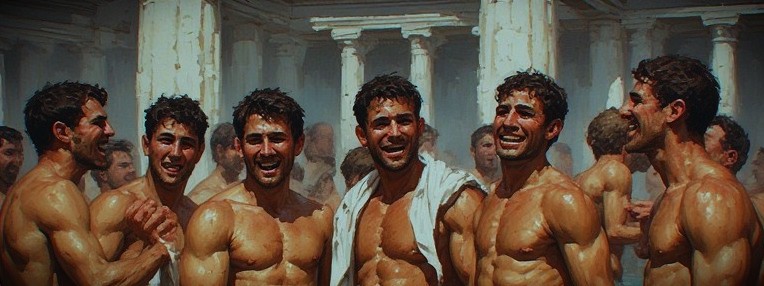
A group of male bathers stand and move within a Roman bathhouse at Terme Taurine, their bodies uncovered as they wash and work in the steam‑filled space.
I’d gone to Terme Taurine, a bath complex set on a low rise overlooking the countryside beside the Via Aurelia, close enough to Rome to reach in a comfortable day’s travel for an imperial party with attendants, slaves, and baggage. It was a routine inspection for me, the kind of errand that fills a junior official’s days and teaches him more about the empire’s machinery than any lecture in the Forum.
The baths were technically an imperial property built years ago by Trajan In practice they were run by a small group of slaves who lived in permanent fear of being noticed by the wrong person. I arrived early, before the crowds, and walked through the outer portico with my tablets and retinue of scribes and personal attendants. Breathing in the familiar mixture of smoke and the smell of men already exercising in the palaestra.
The slaves were at work. Naked, slick with sweat, they moved through the complex with the practised defensive choreography of slaves who had learned to anticipate danger.
Some carried baskets of olive wood; others hauled buckets of water; others tended the great bronze boilers that fed the caldarium. Their bodies were lean from labour, shaped by the strict arithmetic of survival: just enough food to work, just enough sleep to stand, just enough strength to obey.
The bathhouse functioned because they did and like any others in the Roman world, and they functioned because they were kept at the edge of exhaustion.
Their movements were quick and economical, the movements of men who had learned that hesitation invited punishment. The slaves were masculine, muscular in the way forced labour makes slaves muscular, shoulders hardened by lifting, backs roped with sinew from years of carrying fuel, hands calloused from stone and heat.
Slaves had no agency beyond the tasks assigned to them. The threat of a beating hung over them like steam in the air; it was simply part of the architecture.
No one spoke unless spoken to. No one lingered. Even the sound of their feet slapping on the tiles seemed muted, as though they feared to disturb the air. The slaves moved in narrow lines, heads slightly bowed, eyes fixed on their work. I noted it all with the calm detachment of a man accustomed to Rome’s hierarchies.
I saw nothing unusual in the arrangement. A bathhouse of this size required labour, and labour required discipline. The empire ran on such calculations. I didn’t pity them, and simply observed the system working as it was designed to work.
I paused at the threshold of the furnace room. It was always unpleasant in such places, but that morning the heat struck like a physical blow.
Smoke rose in slow coils from the mouths of the furnaces, drifting upward to further stain the already blackened ceiling. The boilers hissed and spat. A pair of slaves were shovelling fuel into the largest furnace, their skin shining in the firelight. They didn’t look up when I entered; they had learned that eye contact could be interpreted as insolence.
I made my observations and my attendants made the notes. I checked the ledgers, and moved on. The baths were in good order. The staff were competent. The slaves were obedient. It should have been an uneventful morning.
It changed the moment Commodus arrived.
He came with noise, laughter, voices, the clatter of sandals on stone. He was twenty, restless, and already accustomed to the kind of obedience that bends men’s spines.
His father was away on campaign, and Commodus travelled with a retinue of rough, boisterous companions from the suburra who treated him as both friend, and spectacle. They flattered him, teased him, encouraged him, and he responded with the careless indulgence of a young man who had never been denied anything. They were like sponges around him soaking up money and privilege.
Behind them came the Praetorians: silent, professional, detached. They watched everything without appearing to watch at all. They were men in love with themselves.
I stepped back into the shadows of a column, content to observe. I had no desire to be noticed that day. Commodus wasn’t yet the man Rome feared, but he was already the man Rome didn’t understand. There was a volatility in him, a sense that he moved slightly ahead of what the world could understand or tolerate. Even his gestures carried a kind of impatience, as though reality itself was too slow for him.
Lampridius was there too, moving among Commodus’ followers. I recognised him at once as the man who wrote everything down, an author in the emperor’s shadow. He stood at a polite distance with his tablet in hand, eyes alert and measuring. He had the look of someone who’d learned how to witness without ever becoming part of the scene, a skill I found myself admiring.
Commodus stripped without ceremony, tossing his clothes to a slave who caught them with both hands as though they were sacred objects. He then stepped into the bath, water lapping against his skin. His companions followed, laughing, splashing, drinking from small gold cups they had brought with them. A large, muscular slave, one Commodus seemed to favour in his retinue, stood nearby, ready to serve or amuse as required.
Then it happened. Commodus lowered himself into the water, paused, and frowned. The room tightened. I felt it before anyone spoke, the sudden stillness, the way the slaves froze mid‑movement, the way the Praetorians shifted their weight almost imperceptibly.
“The water is lukewarm,” Commodus said.
It wasn’t a shout. It wasn’t even anger. It was disappointment, and that was worse.
The bath attendant, a thin, nervous man, stepped forward, trembling. He opened his mouth to apologise, but Commodus didn’t give him the chance.
“Throw him into the oven,” he said. “That’ll heat the water.”
A young Commodus stands in a Roman bathhouse, youthful and muscular, surrounded by a sybaritic court of gladiators, attendants, and household followers.
Flat. Simple. Chilling. The words dropped into the room like a stone into a pond. Everything rearranged itself around them. The slaves moved instantly, seizing the attendant by the arms. The Praetorians didn’t intervene; it wasn’ t their place. Lampridius’ stylus hovered over his tablet. I stood very still, watching the machinery of obedience come alive.
Commodus, satisfied with the command, leaned back in the water. His gladiator friends, naked, loud, drunk already from the night before, gathered around him. The large slave he admired poured wine into a cup and handed it to him. Commodus drank, laughing at some joke one of the men made. The guards stood impassively.
The bathhouse had become a theatre of inappropriate indulgence, with cruelty as its opening act.
I remained in the background, silent, observing, just a junior official. I wanted to be useful to Commodus one day, but not today. Today I watched. Today I learned, and in the rising smoke from the furnaces, in the trembling of the slaves, in the emperor’s careless smile, I understood the first truth about him: he expected the world to bend.
The slave attendant was seized at once. The older, stronger furnace‑slaves closed in on him with the speed of men who’d done this kind of work before. He lashed out in panic, kicking and twisting, but it made no difference; their hands locked around his arms and shoulders, lifting him off balance. His scream echoed through the hall, sharp and terrified. Commodus heard it and laughed, delighted by the theatre of it, pleased with the spectacle he’d created. I stood back and watched, understanding that in the emperor’s presence even a man of wealth could be as powerless as the slave being dragged away.
I followed the slaves but at a distance, Lampridius beside me, his tablet held against his chest. The Praetorians didn’t come; the furnace room was beneath their dignity. Commodus remained upstairs, drinking with his gladiators, laughing at his own command as though it were a clever joke.
The sound of voices echoed down the subterranean stairwell behind us as we descended, coarse street Greek, indulgent, utterly detached from the suffering they had set in motion.
The procession descended into the lower levels of the thermae. The air grew hotter, thicker. Smoke drifted along the ceiling in slow, oily ribbons. The young attendant, naked like all the bath slaves, screamed once, a sharp, panicked cry that bounced off the stone walls. One of the men holding him hissed for silence, but the young victim couldn’t stop trembling.
The furnace room was worse than I imagined. The heat struck like a blow. The great iron door of the main furnace glowed faintly, its hinges blackened from years of use. Carbon coated the floor. The boilers hissed and spat, sending up bursts of steam that clung to the skin. The men who worked here, muscular, hardened, accustomed to the brutality of heat, were already gathering, their faces tight with dread.
Lampridius stood just behind me, his eyes wide, fixed on every detail. He looked horrified, but also intent, as though the scene were imprinting itself directly onto his memory. I could almost see the words forming in his mind.
The seized slave was dragged to the threshold of the furnace. He screamed again, louder this time, his voice cracking. The overseer, an older man with burn scars across his arms, stepped forward. He looked at the furnace, then at the victim, then at the stairway leading back to Commodus. I saw the calculation in his eyes. It took him less than a second.
“Bring the skins,” he said. “Over there”
Two slaves ran to a storage alcove and returned with a bundle of old sheep skins, stiff, greasy, filthy with age. They were the kind used to soak up oil used to lite the furnaces and spillages. The overseer grabbed one, nodded once, and ordered it thrown into the furnace.
The men obeyed instantly. The iron door was hauled open. A blast of heat surged out, forcing everyone to turn their faces away. The sheep skin was tossed inside. The door slammed shut but it couldn’t stop the back-draught of old sheep skins exploding in the heat and bursting into flames. The stench of old wool filled the room and was channled up the stair well,
The stench began to rise into the room and into the stairwell, acrid, heavy, unmistakable. Burning sheep wool covered in filth is a horrible thing. The stench drifted upward through the chimneys, carried by the draughts that fed the furnaces. It would reach the upper halls soon enough.
The overseer turned to the terrified attendant. “Wrap him,” he said. Pointing to the real victim
The trembling slave was pulled aside, shaking uncontrollably. Two slaves wrapped him in one of the old sacks, the same coarse material used to carry wood. It hid his nakedness, hid his shaking, hid the fact that he was still alive. They lifted him, half-carried, half-dragged, toward a side passage that led to a storage room. He vanished from sight, swallowed by the shadows.
Lampridius exhaled slowly. His stylus hovered over his tablet, then lowered. He wrote something, a single line, perhaps, before looking up again. His expression was a mixture of revulsion and fascination. I realised then that he was already shaping the narrative, already deciding how history would remember this moment. I just hoped he wouldn’t add my name to this particular chapter of Roman history.
I stood at the threshold, watching the furnace door, watching the smoke curl upward. My thoughts were cold and precise.
The emperor didn’t need the man to die. He needed the world to bend.
That was the truth of it. This young Commodus, not yet the emperor, demanded obedience, not justice. He wanted the sensation of power, not the consequence, and the slaves, clever, desperate, instinctive, had given him exactly what he wanted while protecting their brother slave.
Above us, the smell reached the main halls. I heard a burst of laughter from Commodus’ companions. Someone shouted a crude joke about eating roast slave. Commodus himself, I imagined, smiled with satisfaction. He wouldn’t check the furnace, that wasn’t the thing a man of his class would never do. He wouldn’t ask to see the body. He would never know the difference.
The overseer wiped sweat from his brow. The furnace slaves returned to their work, shovelling fuel, adjusting vents, pretending nothing had happened. The machinery of survival resumed its rhythm.
I followed Lampridius back up the stairs. The bathhouse air was cooler, though still heavy with the fading stench of burnt wool. Commodus was reclining in the water, cup in hand, his gladiator friends clustered around him. He looked pleased, relaxed, utterly unconcerned and increasingly drunk.
The attendant, alive, hidden, trembling, wouldn’t be seen again that day and Commodus would leave the baths in a good mood.
I watched him go, thinking: This is a man whose favour could be useful, and lethal.
When Commodus left the baths, the atmosphere loosened as though a tight cord had been cut. His gladiator companions trailed after him, still laughing, still naked, always drunk on the emperor’s approval. The Praetorians followed in their disciplined formation, indifferent to the spectacle. Within moments, the upper halls of Terme Taurine were quiet again.
The slaves moved at once.
They scrubbed the floors, wiped the tiles, cleared away the discarded gold cups and discarded cloths. They would be sent on to the imperial palace
They worked quickly, almost feverishly, as though erasing the traces of Commodus’ presence might somehow protect them from future danger. The smell of burnt wool still lingered faintly in the air, drifting through the corridors like a warning.
I walked through the caldarium, watching them. The bath attendant who had been seized was gone, smuggled out through a side passage, shaken but alive.. The overseer had hidden him well.
I shouldn’t have cared. A slave was property, and property could be used, damaged, or destroyed at a master’s whim. I had never pretended otherwise, but the sight of him, terrified, nearly killed for a trivial inconvenience, struck me with a clarity I hadn’t expected.
Next time, the man dragged toward the furnace might not be a slave. It might be me.
Commodus wasn’t a safe man to be near. He wasn’t malicious in the way cruel men are malicious. He was dangerous in the way fire is dangerous: indifferent, unpredictable, consuming whatever lies too close. He punished inconvenience, not betrayal. He reacted to discomfort, not threat. His cruelty was procedural, not passionate.
I found Lampridius in one of the side halls, leaning against a column, scratching notes onto his wax tablet. The writer hadn’t joined the other going back to the palace.His expression was calm, almost serene. He was not moralising; he was documenting.
I realised, watching him, that this man would shape how history remembered. Commodus would forget the bathhouse incident within an hour. Lampridius would remember it for the rest of his life. I stood beside him for a moment. He didn’t look up.
“Will you write it?” I asked the author quietly.
He paused, then nodded once. “It happened,” he said. “That is enough.”
I left him to his work.
In the lower levels, I found the overseer. The rescued slave sat on a stool, still shaking. His eyes darted toward the doorway whenever footsteps sounded. He looked like a man who had been shown the edge of his own mortality and couldn’t forget it.
I made a decision.
“Transfer him,” I said to the overseer. “To my villa in Rome. Quietly.”
The overseer blinked, surprised. “Dominus…?”
“It’s administrative prudence,” I said. “Commodus won’t remember him, but I will.”
It wasn’t mercy. It wasn’t theft of a slave who was said to be deceased by orders of Commodus, simply the safest place for the bathhouse. If Commodus ever returned and recognised his intended victim, the consequences would be catastrophic. Better to remove the slave entirely.
Arrangements were made. The attendant would leave at dusk, disguised among a group of labourers heading toward the city. No one would question it and he’d fit into my garden slaves easily enough. One more among hundreds.
I walked alone through the cooling corridors of Terme Taurine. The heat from the furnaces on my face was fading. The air was still heavy, but no longer oppressive. The smell of burnt wool lingered faintly in my nostrils, a ghost of the days terror.
In the emperor’s presence, status meant nothing. A slave could be dragged to the furnace for nothing more than lukewarm water; a senator could be destroyed for a careless word. The difference was only one of timing.
I realised, with a cold, precise understanding, that I stood in the same atmosphere of danger as the men hauling wood and water. They were powerless because they were owned. I was powerless because Commodus existed.
Limentinus is a digital micro‑publication that explores Roman social life through the lenses of power, sexuality, slavery, identity, and everyday behaviour, written with academic responsibility and structured like a digital humanities project.
Narcissus II: The Strangling of Commodus reconstructs the final night of 945 AUC (31 December 192 AD), when Commodus was poisoned and then strangled by Narcissus, a palace wrestler drawn unwillingly into Marcia’s conspiracy. Based on Cassius Dio and Herodian, the piece explores how Narcissus, became the instrument of the emperor’s death. It follows his panicked flight into the unused wings of the Palatine, his futile hope for pardon under Pertinax, and his eventual capture and execution under Septimius Severus. This historically informed reenactment fills the silence left by ancient writers, tracing one plausible path through the collapse of the Antonine line.
Limentinus
This article is a historically informed reconstruction of the final night of 945 AUC (31 December 192 AD), tracing the death of Commodus, the actions of Narcissus, and the political transition that carried Rome from the collapsing Antonine line to Pertinax and eventually Septimius Severus. Ancient writers such as Cassius Dio and Herodian describe the emperor’s assassination but leave Narcissus’ subsequent movements in silence; what follows is a plausible narrative built from that gap, grounded in known Roman domestic practices, Praetorian interrogation methods, arena punishment customs, and the structure of the imperial household on the Palatine.
It’s a “what‑if” reenactment, not invention for its own sake, but an attempt to walk through the narrow corridor of events that the sources gesture toward without fully describing.
Why did Narcissus strangle Commodus
Bare‑chested Narcissus, close study of the imperial wrestler linked to Commodus’ final night
Narcissus would have known for weeks that something in the palace had turned. Something in the air, something in the way that people spoke, looked and perceived the Roman world.
Commodus no longer fought in the arena for display but for appetite, cutting down any creature brought before him, beasts dragged in nets, animals led trembling into the sand, even the great ones. The tiger, the hippopotamus, numerous elephants.
Commodus fought again after eating, sweating under the secutor’s helmet, striking with the left hand he was so proud of, forcing athletes and gladiators to face him as though he were one of them. The contests grew cruel,. They were no longer staged but real, men dying because he wished to see them die, and the people were afraid. They sensed danger.
It was the very last day of the year 945 AUC (Ab Urbe Condita) and rumours spread that the emperor meant to shoot spectators from the imperial seat, to imitate Hercules and prove he could kill at any distance. People stayed away from the arena a little although Commodus made notes of the Senators who declined to attend.
In the corridors, servants whispered. In the storerooms, slaves kept their heads down. Everyone moved more quietly. Everyone waited. Narcissus at the centre of the palace would have felt it too, the tightening, the dread, the sense that the emperor had begun to enjoy the fear he caused.
Commodus as the god Hercules in the imperial box accompanied by the wrestler Narcissus
At first it would all have felt like good fortune for a wrestler. To be discovered in his home province, lifted out of obscurity, dressed in fine clothing and jewels, placed close enough to the emperor to feel the heat from his blood stained body, it was intoxicating.
Narcissus wouldn’t believe that he sometimes sat beside Commodus in the imperial box, and thenwatched him kill beasts as if it were nothing, and he would have believed proximity to the emperor meant safety, although over the three years he’d been at the palace, Commodus’ displays had grown stranger, and Narcissus would have begun to feel exposed. People knew Narcissus’ face, his build, his gait. They whispered Narcissus’ name. He was too close to the excesses of the emperor, too often beside him when he demanded to be called Lord, God, Hercules.
Saying those words about being a god aloud felt wrong, impious, dangerous, and each time the emperor spoke them, Narcissus felt a little more of the emperor’s madness staining him.
The response to Commodus’ action began with a wax tablet that he kept him under his bed for private notes, lists, and sudden decisions. Marcia, his former favourite, found it by accident, lifting the covers to straighten the bedding and seeing names quickly inscribed into the wax, including her own name.
Marcia showed Narcissus the tablet with her name inscribed on it, and Eclectus’ too, and others whose loyalty Commodus had begun to doubt. Commodus was planning a purge of the palace. Something nasty.
Quintus Aemilius Laetus, the Praetorian prefect, was already in the circle of conspirators; he understood better than anyone that Commodus’ paranoia had reached a point where no one close to him was safe. Narcissus didn’t need to be named to be in danger. The logic of the hour made his name on a later list almost unavoidable.
Marcia would have summoned Narcissus quietly. Not because he was a born killer, he wasn’t a killer, he was just a wrestler on the make and likely to be on the next list.
He was also one of the few freedmen who had served long enough to understand the machinery of the palace. In the nearly three years he was there he’d seen men rise and fall.
Narcissus had watched Commodus’ moods turn from indulgent to lethal as he strutted around as a re-born Hercules dressed in his lion’s skin, and learned that proximity to power wasn’t safety but exposure. When Marcia showed Narcissus the tablet, she didn’t need to persuade him. She only needed to let him read the wax. Marcia watched the logic of it sink into Narcissus’ consciousness.
Narcissus would have stared at the wax tablet for a long moment, not because he doubted its meaning but because he understood it too well. In the palace, a name on a list wasn’t a threat. It was a sentence. The only question was when the sentence would be carried out.
Marcia spoke quietly as a woman who had once been Commodus’ favourite, a stabilising presence in a household that had grown increasingly unstable, but she was also practical. She knew Narcissus was frightened. She knew fear could be shaped, and told him that Commodus had already decided to kill her, Eclectus, Laetus, and others. She told him that the emperor had begun to speak of purging the household. Marcia told Narcissus that he wouldn’t survive the week.
Then she offered Narcissus the only thing she could: a place in the world that would exist after Commodus was gone. Marcia didn’t promise wealth. or promise rank. Marcia promised survival.
Narcissus agreed because he’d no alternative. He wasn’t a trained killer like the Praetorians. He’d never strangled a man in his life, but he understood the logic of the household. He understood that refusing Marcia meant dying under Commodus. Not a lot of choices left in the world.
He understood that accepting the terms from Marcia meant living long enough to see what came next and every man wants to be there at the end of the book. Narcissus understood that Marcia, Eclectus, and Laetus weren’t asking him to kill an emperor in public. They were asking him to finish a job that their poison had already begun.
The timing was deliberate. Commodus had bathed and eaten after coming back from the arena. It was night..
The emperor was relaxed, already drowsy as the poison had begun its work but it didn’t work fast enough, and there was always the possibility that Commodus may raise the alarm. In his weakened state, the emperor could stagger out into a public area and denounce the killers and order their immediate execution.
The poison hadn’t killed Commodus fast enough although it probably was’t ever meant to kill instantly. The poison had to be mild enough to pass unnoticed in wine, subtle enough not to alert the cup‑bearers, and predictable enough to weaken Commodus without causing a scene. The emperor had long taken daily antidote tonics prepared by palace physicians, common practice for emperors who lived in fear of poisoning, and these mixtures blunted the effect of anything slipped into his drink.
With a full stomach after dinner and warm blood from the bath, the toxin acted very slowly, leaving him heavy, sluggish, confused, unable to rise, but still alive. He’d vomited over himself uncontrollably over the bedclothes, an obscene mixture of half‑digested food and streaks of blood that showed the poison had unsettled his body but not finished its work. The toxins created vulnerability, not death, and that was why the conspirators turned to Narcissus to complete what the poisoned wine had begun.
The Praetorians weren’t present because Laetus, their prefect, had withdrawn them. A guard doesn’t intervene when its commander has already decided the emperor must die. The household attendants were few: a bath slave, a cup‑bearer, one or two men who had served Commodus for a few days only and knew better than to question Marcia’s presence. The long-term serving staff had been purged a few weeks ago.
Commodus and Narcissus in better days, sparring in the arena seen by the population of Rome.
Narcissus entered the room quietly. He’d been told what to expect: Commodus weakened, confused, vomit stained and unable to rise. Narcissus stood at the threshold for a moment, watching the emperor breathe. He felt no hatred. Only fear. Fear of the man on the couch, fear of the conspirators behind him, fear of the future that had narrowed to a single act.
Commodus tried to speak when he saw him, but the words broke in his throat. Narcissus stepped forward. He didn’t think of himself as a murderer; he thought of himself as a man pushed down a corridor with only one direction left. He stood beside the bed, set his hands around the emperor’s neck, and tightened. The first pressure was clumsy, uncertain, the grip of someone who had never done this before. Commodus’ body tried to resist in the way a weakened body does, hands lifting without force, fingers opening and closing as though searching for air, legs kicking in short, uncoordinated bursts.
Commodus breathing changed quickly: first a sharp intake, then a ragged, uneven rhythm as the muscles of the throat fought for space. Narcissus held on, frightened, sweating, his own breath shallow and fast. He knew that once the struggle began, it couldn’t be undone. Commodus’ efforts grew smaller, the movements losing coherence as the body’s strength ebbed. The chest rose once, faltered, and then stopped.
There was no shout, or alarm raised. No rush of guards. Only silence in the palace.
Marcia watching from the shadows exhaled. Eclectus some distance apart looked away. Laetus nodded once, the gesture of a man who had already begun thinking about the next hour, the next day, the next emperor.
The conspirators didn’t linger. They scattered quickly, each had planned in advance hurriedly taking what they had packed and put to one side, gold, silver, small cameos. Portable valuables that could be hidden in clothing or bags. The palace was vast, full of storerooms and unlocked chests. In moments of regime change, looting wasn’t opportunistic. It was expected.
Narcissus stayed where he was, staring at the body of the man he’d wrestled beside for three years. He felt no triumph. Only the cold, rising awareness that he’d stepped out of one life and into another, and that the second had no shape yet. Commodus’ body still looked powerful even in stillness, the broad chest, the heavy shoulders, the strength Narcissus had felt so many times in the practice ring. He’d admired that strength, always quietly, always at a distance, because admiration was dangerous when directed toward an emperor. Fear had kept every thought locked behind his ribs. Now that same fear held him motionless. He didn’t flee. He didn’t follow the others. He walked out of the room, down a corridor, and into a quiet wing of the Palatine where unused suites lay open and unguarded.
Narcissus wouldn’t have had a plan. He’d been approached by Marcia without preparation or planning and in a moment of fear he’d acted as instructed. Narcissus may have wondered why he’d strangled a man although in a Rome that was full of murder and where men were desensitised in the arena maybe strangling someone was normalised.
He’d a sense of desperation, and desperation told him that the palace, for all its danger, was the only place he understood after three years of living in Rome. He was still an outsider who didn’t know anyone of significance. Commodus was quite clear that he didn’t want Narcissus caught up in the power plays in Rome. Narcissus was there as a playmate for Commodus and for no-one else.
As a result, Narcissus would be on his own and would quickly made for a small set of rooms, storage spaces, servants’ quarters, a disused office, and sat down. There may have been food everywhere in the palace: bread left on tables, fruit in bowls, wine in amphorae. The palace was a world built for abundance. Narcissus would eat, and drank and waited for his heart to slow down a little.
He wouldn’t hide. He’d simply stay without a plan. When everyone scattered there were no soldiers around, everyone just ran and the Palatine Palace emptied and now there was a sense that things were returning to normal. Guards slowly returned to the halls and corridors, orders were barked loudly.
Narcissus didn’t choose his rooms so much as drift into them. The wing he settled in was one of the older sections of the Palatine, a place where clerks once worked and where minor stewards had kept accounts before Commodus reorganised the household. The corridors were quiet. The lamps were unlit. The doors stood open, as though the palace itself had forgotten they existed. Narcissus moved through them slowly, listening for footsteps, voices, anything that might signal danger, but the palace was vast, and in the first hours after an emperor’s death.
He sat down and waited. He didn’t know what else to do. He’d killed an emperor. He hadn’t fled as perhaps he should. He’d no instructions, no patron, no protection. Narcissus had only fear, and fear told him to stay where he was.
Marcia had gone and taken her slaves with her. When he thought about his future he wondered how he could ever have escaped, he was after all a muscular 2.03 metres tall. Narcissus stood out and he’d been seen with the emperor at receptions and the arena for a year at least. Hiding Narcissus would have been difficult.
On the first day after the death of the re-born Hercules, he saw almost no-one. A pair of slaves hurried past the corridor once, stealing baskets of purple dyed clothing to sell in the markets of the suburbs. A clerk walked by later, muttering to himself, his arms full of scrolls. None of them looked at Narcissus. None of them saw him in the shadows and the confusion. The palace was full of new faces, and Narcissus.
Pertinax’s name reached me before I ever saw the man. I knew only that he was the son of Helvius Successus, a freedman from Alba Pompeia, a man raised from modest beginnings and educated well enough to rise through Roman life. The palace whispered about him long before he appeared: slaves passing by my door murmured his name, clerks spoke it hurriedly as they moved through the corridors, Praetorians repeated it in low voices at their posts. Pertinax. A senator. A disciplinarian. A man who had tried to restrain Commodus’ excesses. I didn’t understand why his name mattered, but I understood that it had become the centre of the palace’s attention, and attention in those days was dangerous.
He hoped Pertinax would pardon him. Narcissus realised it was a foolish hope, but hope is rarely rational. Narcissus told himself that Pertinax was a man of order, a man who disliked Commodus’ cruelty, a man who might understand that the killing had been necessary. He lingered in the corridors, listening for news, waiting for signs that the new emperor had begun issuing commands. He imagined being summoned, questioned, forgiven. He imagined being allowed to remain in the palace, perhaps as a minor steward or clerk. He imagined a future. Every man likes to think he has a future and Narcissus didn’t want to return to his old town. That life didn’t appeal at all
The Praetorians were no longer indifferent and Narcissus sensed from their talk that they had been well paid.. Laetus had withdrawn them during the killing in a very political manner, but Laetus was gone now, replaced by men who wanted to prove their loyalty to Pertinax.
Narcissus tested the edges of the palace at night, moving toward the main halls, the outer courtyards, the places where guards stood watch. Each time he approached, he saw the Praetorians searching rooms, torturing slaves for information, inspecting storerooms. Narcissus stepped back quickly, returning to his wing before anyone noticed him.
He had clothing, fine tunics taken from abandoned chests, cloaks left behind by fleeing stewards. He had gold and silver, small pieces he’d gathered in the confusion after the killing. He even found wigs and theatrical disguises in a storage room used for palace entertainments. He tried them on, looking at himself in reflections, but each time he prepared to leave in disguise, something stopped him. Fear. Uncertainty. The sense that the shrinking world of the Palatine palace, for all its danger, was still the only place he understood while the world went mad around him.
Pertinax’s men searched the palace for two days. They didn’t find Narcissus. They found others instead, men and women who had been “reminded of their duties,” “corrected,” or “returned to discipline,” the soft Roman phrases that covered beatings, confinement, and the small humiliations used to extract information. Slaves who had overheard too much, clerks who had carried messages: all were submitted to the usual “necessary measures.” Narcissus remained invisible. He stayed in rooms no one used, moving only at night, eating whatever he found on trolleys in the corridors, bread left on tables, fruit in baskets, wine in amphorae. He slept lightly, waking at every sound.
Days became weeks and the food became more erratic, less of it was left outside rooms to be cleared away, less for Narcissus to take away secretly to his hiding place. Water was harder to find and the wine ran out and he began to sober-up. Narcissus found it harder to keep clean with the limited water he found. In the middle of the night,
He told himself he had a plan, though it barely deserved the name. One day, when Pertinax was near, he would step out of the shadows and speak to him. He imagined presenting himself to the new emperor as a man caught in a misunderstanding, a Roman patriot who had acted under necessity, someone who could be restored to favour with a word. It was the kind of hope men in the palace clung to when they had nothing else.
Commodus lies poisoned while Narcissus enters the room
Narcissus heard the news from a pair of slaves who passed through the corridor, speaking in frightened whispers. The Praetorians had killed Pertinax after just over twelve weeks. Others had come and gone. It was confused, messy not at all what Narcissus needed to hear.
The palace was in chaos again. Narcissus felt the hope he’d been clinging to collapse. Pertinax had been his imagined future, the man who might have understood, the man who might have pardoned him if only Narcissus could have reached him in the palace and talked to the emperor. If only Narcissus could have spoken to Pertinax quietly and pleaded for his own life.. Now that particular emperor was gone before his time, and Narcissus was trapped in a palace that no longer had a master although the Praetorians were guarding the access routes.
He told himself again and again he should have left earlier. He told himself he should leave now. He gathered his looted gold, his clothing, his disguises. He rehearsed what he would say to a guard. He imagined bribing his way out. He imagined slipping through a gate at night and into the darkness, but imagination isn’t action, and Narcissus had lived too long inside the palace to know how to move beyond its walls.
Time and the imperial lifestyle had made him indecisive and he over thought everything. He’d seen people torn apart by the mob and he saw people killed in purges and he was very much afraid.
He approached a guard in a clumsy, hesitant way, a new recruit, young and uncertain, a Thracian posted at a minor northern gate. Narcissus offered him a profane amount of gold, more than any freedman should have carried. The recruit listened, nodded, even smiled, the way inexperienced men do when they think they’ve been handed an opportunity.
As Narcissus spoke, the guard’s expression changed. He began to take in the details: the height, the barrel chest, the wrestler’s shoulders, the unmistakable frame of a man trained for strength. Recognition came slowly, piece by piece, like a mosaic assembling itself. A freedman of that size. A man hiding in the palace. A man offering gold to be let out quietly. The recruit finally understood who stood before him.
And then he did exactly what a new recruit eager to prove his loyalty would do. He reported Narcissus to his senior officer, and the news travelled quickly, up the chain of command, through the Praetorian barracks, and into the ears of the new emperor, Septimius Severus.
Severus wanted to show he’d no part in Commodus’ murder. He wanted to show the Praetorians that he wasn’t weak. He wanted to show the Senate that he wasn’t complicit. Narcissus was the perfect symbol: a freedman and former slave, a conspirator, a man who had killed an emperor showing no loyalty to Hercules himself.
Narcissus was taken to the cells beneath the palace. He was stripped, the usual “preparation” the Praetorians used when a man was to be questioned, and subjected to the standard “indignities” that passed for procedure. They needed to show the new emperor they had been innocent of Commodus’ murder, and Narcissus became the proof they offered. He was beaten in the controlled, methodical way the guard called “correction.” He was left without food, told it was “a necessary pause.” Water was withheld under the phrase “restraint.” Each euphemism hid a small humiliation, and each humiliation weakened him.
Days passed. The body doesn’t collapse all at once; it thins, it slows, it loses its ability to regulate heat, its strength drains from the limbs first, then from the chest. After weeks of hiding, hunger, and fear, Narcissus had little left. By the time the Praetorians were finished with him, he was worn down to the point where even standing felt like an effort borrowed from somewhere outside himself.
They brought Narcissus into the arena at mid‑morning, when the sun was high enough to flatten shadows and make every movement visible. He could barely walk and was disorientated. This was how Rome liked to present the condemned. Vulnerable, weak and a victim of entertaining viewers.
The days in the cells beneath the palace had stripped him down to something smaller than a man: dehydrated, bruised, starved, and exhausted. The Praetorians had done their work with a kind of eager precision, each blow a declaration of loyalty to the new emperor. They wanted Severus to see that they had no part in murdering Commodus, and hadn’t aided Narcissus.
Narcissus stumbled onto the sand of the arena, naked as was customary for the condemned, his hands tied behind his back. The position hid the damage already done to him. Being held in stappado had torn the muscles of his shoulders and upper arms; binding his wrists behind him concealed the Praetorians’ work under the appearance of ordinary restraint. He moved stiffly, each step showing the strain of joints pulled from their proper alignment, the slow collapse of a body that had been deprived, beaten, and “corrected” in the usual Roman manner.
The crowd was small, this wasn’t a festival day, not a scheduled spectacle. It wasn’t being portrayed as a political act. Narcissus was an emperor killer, disloyal, the worst!
A few hundred citizens had gathered, drawn by rumour and curiosity. They whispered among themselves, trying to understand who the man was and why he’d been condemned. Narcissus heard none of it. His hearing had dulled. from the repeated beatings. His thoughts were slow through dehydration. He felt only the heat of the sun and the roughness of the sand beneath his feet.
On the imperial platform, Septimius Severus stood with his officers. He watched with the calm detachment of a man who understood the necessity of the moment. Severus had come to power through military discipline and political calculation.
He needed Rome to see that he’d no part in Commodus’ death, that he didn’t tolerate palace conspiracies, that he punished those who acted outside the proper channels of authority. Narcissus wasn’t being executed for killing Commodus. He was being executed for killing an emperor without permission.
A herald stepped forward and read the charges. His voice carried across the arena, clear and formal:
“By order of the emperor, this man is condemned for treachery, conspiracy, and the unlawful killing of Commodus Caesar.”
Narcissus was required to respond. The Praetorians had told him what to say. He lifted his head, his voice hoarse and thin.
“I confess,” he said. “I agree.”
It wasn’t a plea. It was a ritual. Rome didn’t need his guilt; Rome needed his compliance.
Archers stood along the edges of the arena, their bows half‑drawn, not to kill him but to herd him, to keep Narcissus moving, to make sure the spectacle followed its proper course. They weren’t Praetorians. They were a levy from Bithynia, provincials drafted into service, unfamiliar with Rome’s household politics, unaware of who Narcissus was or what he’d done. To them he was simply a condemned man, a naked giant pushed into the sand for the city’s amusement.
The archers laughed when they saw him. They jeered at Narcissus’ size, at his trembling legs, at the way he tried to cover himself before remembering his hands were tied and broken. They called out lewd encouragements, mocking him. Spectators mocked slow runners and clumsy victims. It was part of the ritual: humiliation before death.
Narcissus didn’t wait for their arrows, he knew what happened in an arena. He’d watched from the imperial box beside Commodus and now he was in the arena performing his role as a condemned man.
He turned and ran toward the centre of the arena, almost stumbling immediately, his breath shallow, his heart bursting against his ribs. He lurched forward, nearly falling, the sand shifting under his feet. The crowd roared, not in admiration, but in derision. They shouted advice, insults, and jokes. They mocked his size, his fear, his awkward gait. They had come not for justice but for the small pleasure of watching a man fail.
The gate opposite him opened. The pack of wild dogs spilled out, taunted and half‑starved, restless, trained for aggression. They didn’t roar or howl. They ran toward food. The crowd’s noise rose again, a coarse, delighted sound, The spectators enjoyed the moment a man realises he can’t escape.
Narcissus, killer of Commodus thrown to wild dogs.
Narcissus ran because running was the last act left to him, and as he ran, stumbling, gasping, he remembered everything he should have done: he should have fled the palace, he should have bribed a guard earlier and not later, he should have left Rome behind following Marcia as she fled. Instead he’d spent twelve weeks in an internal exile, hiding in the very building where he’d killed an emperor, reliving the moment in the quiet hours, waiting for a future that never arrived.
The dogs reached him quickly. The crowd cheered and jeered, their voices rising and falling like a single coarse breath. Severus didn’t join them. He stood watching the judicial act with the stillness of a man who understood its purpose. This wasn’t revenge. It was judgement.
For a moment, the emperor’s face didn’t show triumph or satisfaction. It showed calculation. Narcissus’ death was a message: the new regime was clean, disciplined, and uncompromising. Household killers, freedmen conspirators, and private actors had no place in the imperial order Severus intended to build. The spectacle ended quickly. The arena workers moved in to clear the carcass away. The crowd dispersed. The emperor left without comment.
By evening, Narcissus’ name had already begun to fade. Rome remembered emperors, generals, senators, and victories. It didn’t remember freedmen who acted out of fear, or men who killed because they believed they had no choice.
The rooms he’d occupied in the Palatine were cleared the next day. The cushions were taken, the wine amphorae emptied, the disguises removed. No one asked who had lived there. No one wondered how long he’d stayed. The palace absorbed the space again, as though Narcissus had never existed.
Rome doesn’t remember men who act once and then disappear. It remembers the moment, not the man.
In the end, Narcissus remains a figure glimpsed only in the margins of the ancient writers, a man brought to Rome to entertain an emperor, not to shape history. The sources give us almost nothing of his inner life, only the bare outline of a wrestler drawn into the private world of Commodus’ amusements. This reconstruction follows the narrow path available to him: a man without power, forced to act in a moment where refusal meant death, and then abandoned to the machinery of imperial punishment once his usefulness ended. What happened after the strangling is lost, but the logic of Roman power is clear enough. Narcissus was never the architect of events.
He was their instrument, frightened, coerced, and ultimately subjected to the same terror that defined the household he served. More victim than aggressor, he stands as one of the many anonymous lives bent and broken by the violence of 945 AUC.
Further Reading
Nicholls, Matthew. “Galen and the Last Days of Commodus.” Galen’s Treatise Περὶ Ἀλυπίας (De Indolentia) in Context: A Tale of Resilience, edited by Caroline Petit, vol. 52, Brill, 2019, pp. 245–62. JSTOR, http://www.jstor.org/stable/10.1163/j.ctvrxk2wj.13. Accessed 9 July 2026.
This article offers a historical analysis of how slave purchasing operated in ancient Rome, examining the legal and economic structures that governed the process. Roman law classified enslaved men as res, property without legal personhood, and the marketplace reflected that status through formal procedures, contracts, and taxation. Rather than focusing on graphic detail, the discussion outlines the institutional mechanisms behind the trade: who typically bought slaves, how enslaved men entered the system, how prices shifted with supply, and why slavery formed a central pillar of Roman economic life. The aim is to explain how commodification functioned within Roman society and how legal definitions erased identity and autonomy the moment a person entered the commercial sphere.
Limentinus
Roman Slave Market: A Study of Law and Power
Marble portrait bust of a man Roman ca. 110–120 CE. This man’s resolute expression and the simple yet studied arrangement of locks at his forehead bring to mind official portraits of the emperor Trajan (r. A.D. 98–117). Part of The Metropolitan Museum of Art’s open Access policy, Object Number: 10.231.2
In the Roman world, law made the status of a slave brutally clear. A slave was ‘res‘, an item of property. He couldn’t marry, testify, own possessions, or bring a case to court. Any injury done to him was legally understood as damage to the owner’s property, not harm to a person. Even the peculium, the small fund some slaves managed, belonged entirely to the master and could be reclaimed at any moment.
Historical Context
This legal framework erased personhood. A male slave was vulnerable and had no recognised identity, no rights, and no protection. His labour, body, and future were controlled entirely by the household’s patriarchal authority. Roman writers occasionally acknowledged the humanity of slaves, but the law never did. Roman slavery was a legal and economic institution embedded in the structures of the empire. Understanding how the marketplace functioned helps clarify how Roman law defined and controlled enslaved people.
Who Bought Slaves?
Most buyers weren’t senators with hundreds of slaves. They were ordinary Roman men with modest apartments and enough income to avoid performing every chore themselves. Owning at least one male slave was part of adult life, a marker of status, convenience, and masculine authority.
A typical buyer wanted a young adult male slave who could carry loads, run errands, accompany him in public, and reinforce household dignity. In Rome’s crowded and often violent streets, having another man at one’s side was practical.
A slave in a phallocentric culture was both labour and protection, a silent extension of the master’s presence. A slave could also be forced in to prostitution in a brothel without recourse to complaint,
Where Slaves Came From
Slaves entered the market through capturing men in war, piracy, debt, or birth into slavery. The system reproduced itself automatically: children born to enslaved mothers were enslaved. Rome’s expansion ensured a constant supply of captives, and traders moved men across the empire as commodities. The origins of enslaved men mattered only insofar as they affected price, temperament, or perceived usefulness.
The Roman slave market, in a globalised empire, was a homosocial environment: men buying men, men inspecting men, men negotiating over the bodies of other men. The process was unapologetically physical. A buyer expected the slave to be routinely be stripped so his body could be examined openly. This wasn’t considered cruel, it was due diligence on the part of the buyer.
The inspection resembled the evaluation of livestock at the auction. Traders staged the bodies accordingly, presenting men as products. The market normalised the reduction of a person to a commodity, and the public nature of the inspection reinforced the slave’s lack of agency. He stood exposed, silent, and powerless while men appraised him.
Timing the Purchase
A shrewd buyer watched the market carefully. Prices fluctuated depending on supply:
new shipments after military campaigns
days when traders were eager to sell remaining stock
late afternoons when heat and fatigue softened prices
Festival days and mornings were avoided because wealthy buyers crowded the market. The best bargains came when traders were desperate to meet quotas. Even in this detail, the system treated male slaves as inventory, something to be moved quickly, efficiently, and profitably.
Naming the Slave: Erasing Identity
Once purchased, a slave’s identity was reshaped immediately. Roman owners chose names that reflected their tastes, prejudices, or humour. Names like Felix (“lucky”) or Eros (“pleasant”) were imposed without consultation, often signalling the expectation of sexual intimacy rather than individuality. Some names mocked origins or temperament; others were chosen simply because they amused the master.
Naming was an act of ownership. It severed the slave from his past and made him easier to control. For abducted men, a new name also made it harder for relatives to trace them. Roman literature, like the Satyricon with Encolpius as narrator makes clear that names were part of the wider system that reduced slaves to roles, labels, and functions.
Why Slavery Was the Backbone of the Roman Economy
Slavery underpinned almost every sector of Roman life. Male slaves worked in all sectors of the economy, agriculture, mining, construction, shipping, textile production, and domestic service. Large estates relied on gangs of agricultural slaves, while urban households depended on enslaved labour for cooking, cleaning, childcare, and errands.
The grandeur of Roman life, the baths, the banquets, the public spectacles, rested on the backs of people who had no freedom. Without slaves, the elite couldn’t maintain their lifestyle or public image. Slavery wasn’t an auxiliary system; it was the economic engine of the empire.
The Violence Beneath the Routine
Roman satire from Pliny and Juvenal and comedy from PLautus reveal the contradictions of the system: the casual cruelty of the Satyricon, the capture and public inspection of bodies, and the way status shaped every interaction. None of these sources question slavery itself. The violence was structural, not exceptional. It was embedded in the economy, the law, and the daily routines of Roman men.
The slave market made this violence visible. It showed how easily a man could be reduced to a thing, stripped, examined, renamed, and absorbed into a household where his existence served someone else’s dignity. It showed how a charge of ‘effeminacy’ could damage an owner’s reputations and damage a political career. A reliance on slaves could be seen as an Eastern tradition and A profligate, degenerate, luxury
Buying a slave in ancient Rome wasn’t an aberration. It was a routine act of masculine authority, shaped by law, custom, and economic necessity. The process exposed the harsh logic of Roman society: men buying men, evaluating bodies, negotiating prices, and completing the paperwork that transformed a person into property.
Understanding the mechanics of Roman slavery and the possibility for manumission helps us recognise the structural violence embedded in ancient societies and the ways historical systems shaped human lives.
This article examines Roman slavery as a historical system and does not endorse or normalise the practices described.
Further Reading
Bradley, Keith R. “Roman Slavery and Roman Law.” Historical Reflections / Réflexions Historiques, vol. 15, no. 3, 1988, pp. 477–95. JSTOR, http://www.jstor.org/stable/23232665. Accessed 11 July 2026.
Slave Meta Hub A structured gateway into Rome’s systems of ownership, coercion and domestic hierarchy.
Roman Religion: Meta Hub Explores the rituals, household cults and civic expectations that shaped Roman identity and behaviour.
Rome: Daily Life Meta Hub A survey of ordinary routines, labour, domestic authority and the social pressures that governed everyday life.
The Roman World A wider contextual hub covering politics, culture, geography and the shifting ideals of Romanitas across the empire.
Gordon, Mary L. “The Nationality of Slaves under the Early Roman Empire.” The Journal of Roman Studies, vol. 14, 1924, pp. 93–111. JSTOR, https://doi.org/10.2307/296326. Accessed 6 Sept. 2026.
Limentinus is a digital micro‑publication that explores Roman social life through the lenses of power, sexuality, slavery, identity, and everyday behaviour, written with academic responsibility and structured like a digital humanities project.
FAQ
FAQ 1 – Did Roman men prefer buying male slaves?
Yes. In the imperial period, most household buyers were men purchasing other men. The typical first‑time buyer was probably a middling Roman householder who wanted a young adult male slave to manage domestic tasks, carry loads, accompany him in public, and reinforce household dignity.
FAQ 2 – How did Roman buyers evaluate the appearance of a male slave?
Appearance mattered, especially for male slaves intended for household service. Buyers inspected: Muscle tone, Posture, Skin condition, Signs of punishment or escape. Calmness under scrutiny
FAQ 3 – Were male slaves ever chosen for their beauty or presence?
Yes – Some buyers were known for selecting male slaves partly for appearance, especially in an elite house. a master’s household was a public expression of taste, status, and masculine authority. A well‑presented male attendant reinforced the master’s social image.
This page looks at what Roman baths were really like for ordinary men, moving beyond the marble ideal to the noise, labour, heat and human press of daily life. It explores how bathhouses functioned as places of work and leisure, where hygiene, social mixing, sex, conversation and routine all overlapped. By tracing the rhythms and realities of these communal spaces, the piece offers a vivid picture of how Romans washed, relaxed, interacted and navigated the crowded world of the thermae.
Limentinus
Roman Baths: Sweat, Steam and the Ordinary Man
A group of men bathing together in a Roman bathhouse, standing and sitting in the warm water emphasising the homosocial environment typical of Roman public baths.
This article looks at baths in the Roman World from the ground up. It focuses on the ordinary man in Rome, the one who lived in cramped rooms, worked long hours and relied on the baths for warmth, rest and a sense of belonging. It also considers what we can responsibly extrapolate about life in the provinces, where bathhouses followed the same basic pattern but served different communities.
Bath houses are usually imagined as calm marble sanctuaries, but the real experience was far more crowded, noisy and human. In daily Roman life, especially for the poor, the baths weren’t a luxury spa.
They were a daily necessity, a workplace, a social arena and sometimes a place of risk. Archaeology and ancient writers show that the baths were one of the few spaces where rich and poor stood side by side, even if they didn’t experience the place in the same way.
By combining archaeological evidence with the voices of ancient authors like Juvenal, Martial and Seneca, we can reconstruct what it felt like to move through the steam, noise and crowds.
We can also see how the baths blended hygiene, labour, sexuality, status and spectacle into a single shared ritual. For the poor man, the baths offered comfort and opportunity, but also exposure, judgement and the constant reminder of Rome’s social hierarchy.
Bathing for everyone, at least in theory
The Roman world had hundreds of public baths, and entry fees were deliberately low. On many days wealthy patrons or emperors paid for free admission. Poor men used these days eagerly. Warm water, steam and a few hours of rest were luxuries in a city where most people lived in cramped, unheated rooms.
There are always questions about the cleanliness of the baths although they were probably always unhygienic by 21st Century standards.
A poor man entered through the atrium, paid a token fee or nothing at all, and moved into the apodyterium, the changing room. Slaves called capsarii guarded clothing, although theft was common. Martial jokes about attendants who were so decrepit or incompetent that they embarrassed their masters. A poor man didn’t have jewellery or fine fabrics to lose, but losing his tunic meant losing all he had.
From there he followed the same sequence as everyone else: the cold plunge of the frigidarium, the warm transition of the tepidarium and the intense heat of the caldarium. In these rooms, class boundaries softened. Everyone sweated together, but equality was superficial. The poor man was surrounded by wealth he could never touch: scented oils, expensive towels, slaves carrying baskets of cosmetics and the polished bodies of men who didn’t spend their days hauling loads or working in the furnaces.
Juvenal’s satire on the baths makes this clear. The poor man is jostled, ignored and occasionally mocked, while the rich glide through the complex with attendants clearing the way.
The labour behind the luxury
For many poor men, the baths weren’t leisure at all. They were work. Bathhouses relied on a hierarchy of labourers. In some ways the baths were liminal places where the poor crossed into the world of the rich and vice-versa:
balneator, the general attendant
capsarius, the clothing guard
unctores, who applied oils
aliptes, who scraped the skin with strigils and gave massages
fornacatores, who fed the furnaces that heated the hypocaust
latrinales, who cleaned the latrines and drains
aquarii, who managed water flow and temperature
These jobs were exhausting and often dangerous. The hypocaust rooms were suffocating. The drains carried human waste. The strigils scraped sweat, oil and dirt into piles on the floor. A poor free man might work alongside slaves, indistinguishable in labour if not in legal status.
Sex, solicitation and blurred boundaries
A corner of a Roman bathhouse where men lingered in the steam, some engaging in quiet, transactional exchanges emphasising the low‑cost of prostitution at the baths This is the economic power imbalance between wealthier patrons and those often compelled to offer services.
Baths weren’t always brothels, but they were sexualised spaces. Smaller neighbourhood balnea often had reputations for prostitution or casual encounters. Mixed bathing happened at certain periods, even though some emperors tried to regulate it. Slaves were used sexually by their owners, and prostitutes of both sexes approached clients in the atrium or in side rooms.
This doesn’t mean every bath was a den of vice. It does mean that sexual opportunity and sexual risk were part of the environment. A poor man wasn’t usually the one doing the choosing. He might be propositioned, but rarely on equal terms.
He might witness elite men using slaves. He might be judged as desirable or undesirable based on his body. The baths were a place where desire, power and the vulnerability of men sat side by side.
Massages, grooming and the labour of touch
Bathhouses offered services that required physical contact. Unctores applied scented oils, aliptes scraped the skin with strigils and masseurs worked tired muscles. Barbers trimmed hair and beards and removed body hair by depilation. These services were part of the experience for those who could afford them.
A poor man usually couldn’t afford services. He might get a basic scrape or a quick rubdown, but he didn’t have the money for luxury treatments. Even so, he moved through a world where bodies were constantly handled, touched and evaluated.
That physical intimacy between strangers, between classes and between free men and slaves is one of the most distinctive features of Roman bathing culture.
Culture in the steam
Bathhouses weren’t quiet. They were cultural hubs where Romans recited poetry, debated politics, gossiped, negotiated business and arranged dinners. Seneca’s description of the noise, with weightlifters grunting, swimmers splashing and vendors shouting, isn’t exaggeration. It’s the soundscape of ordinary life.
For a poor man, this meant access to information he might not get elsewhere. He could overhear elite conversations, pick up news or catch fragments of poetry.
He might even find work or a patron. The baths were one of the few places where he could stand within arm’s reach of a senator, a merchant, a freedman or a visiting provincial.
Latrines, filth and the realities of shared space
Many bath complexes included communal latrines. These were social spaces too, filled with conversation, jokes, graffiti and the unavoidable realities of shared sanitation. The baths were warm, comforting and communal, but they weren’t hygienic in the modern sense.
Shared water, shared tools, shared steam and shared waste meant the baths could spread disease. Water‑borne illness was a risk, especially in large pools that weren’t drained daily.
Skin diseases spread readily in the baths. Communal strigils could pass on fungal infections, impetigo, and other bacterial conditions. Warm, damp rooms encouraged the growth of ringworm and athlete’s foot. Close contact made scabies easy to transmit. Steam rooms often worsened chronic respiratory problems, and sexual encounters carried their own risks. Romans bathed for pleasure, heat, and humoral balance, not to prevent contagion.
A poor man, who didn’t have private oils, towels or slaves, was more exposed to risk than most.
A microcosm of Roman life
A raucous group of men in the public baths laughing and singing. AI generated
For an ordinary Roman man, the baths were many things at once. They were a refuge from cold rooms and hard labour, a place to warm up, relax and socialise. They were also a workplace if he served as an attendant.
They were a stage where he was both observer and observed, a site of pleasure, risk and opportunity. They were a civic centre where news, gossip and politics circulated. Men negotiated nudity for themselves. For some it was accepttable and for some it was less so.
The baths weren’t simply places to get clean. They were places where Romans lived, watched, touched, judged, flirted, argued, sweated and dreamed. They were the city in miniature, and for the poor man, they offered a rare moment of warmth and belonging in a world that rarely gave him either.
Roman bathhouses weren’t just places to wash and maintain health. They were the beating heart of daily life, especially for men who lived in cramped rooms and worked long hours. For the poor, the baths offered warmth, rest and a rare sense of belonging in a city that didn’t give them much comfort. They also exposed them to judgement, disease, noise and the constant reminder of Rome’s social hierarchy. Going to the baths didn’t expose men to the charge of cultural ‘effeminacy‘, instead it showed a Roman man as being a traditional Roman man.
By looking closely at the archaeological evidence and the voices of writers like Juvenal, Martial and Seneca, we can see how the baths blended hygiene, labour, sexuality, status and spectacle into a single shared ritual.
A poor man might have entered the complex with nothing more than a worn tunic, but he stepped into a world filled with heat, gossip, poetry, politics, flirtation and the labour of dozens of unseen slaves. It was a way of displaying ‘Romanitas‘ or ‘Roman-ness’
Provincial bathhouses followed the same pattern, even if they were smaller or shaped by local needs. Whether in Rome or in a frontier town, the experience of bathing brought people together in ways that were intimate, competitive and sometimes uncomfortable. The baths were a microcosm of Roman society, revealing its pleasures, its inequalities and its contradictions.
Understanding how ordinary men used these spaces helps us see Rome not as a world of emperors and marble, but as a place where real people lived, sweated, argued, worked and tried to find a moment of warmth in the steam.
Limentinus is a digital micro‑publication that explores Roman social life through the lenses of power, sexuality, slavery, identity, and everyday behaviour, written with academic responsibility and structured like a digital humanities project.
FAQ
Two men in the baths at the outfall pipe for the clean aqueduct water
FAQ 1 – Did poor men actually use the Roman baths?
Yes. Poor men used the baths regularly because the entry fee was tiny and the baths offered warmth, water, and sociability they couldn’t get at home. For men living in cramped, cold rooms, the baths were one of the few public spaces where poverty didn’t exclude them.
FAQ 2 – What skin conditions could poor men catch in the baths?
Poor men were exposed to the same infections as everyone else, but their living conditions made them more vulnerable. Communal strigils could pass fungal infections like ringworm, and damp floors encouraged athlete’s foot. Bacterial conditions such as impetigo or folliculitis spread easily when tools weren’t cleaned, and crowded rooms made scabies common. The baths offered comfort, but they also circulated the infections typical of any warm, communal environment.
FAQ 3 – What was a Roman brothel boy?
Roman brothel workers were typically slaves with no legal status. Ancient sources describe slaves operating in cramped, poorly maintained spaces, sometimes in bath houses, where coercive exploitation was routine. These individuals had no meaningful legal protection and were classified as infames, a category that excluded them from civic rights and formal legal standing. In Roman usage, the term ‘boy‘ or ‘puer’ referred to a male slave regardless of age, reflecting status rather than a specific stage of life.e..
This article explores Pliny’s narrative of Macedo’s death illustrates the everyday cruelty embedded in Roman slavery, while Juvenal’s satire demonstrates how unequal power and enforced dependency blurred the line between freedom and subjugation.
Limentinus
What Pliny and Juvenal Reveal About Roman Slavery
The role of male slaves in a Roman household, with males performing domestic tasks such as serving.
Pliny the Younger’s account of the murder of Largius Macedo (Letters 3.14) is one of those Roman stories that lingers. Macedo, himself the son of a former slave, had become a master notorious for his brutality.
Pliny describes how Macedo treated the people he owned with contempt, violence, and humiliation, until the day several of them turned on him. The attack shocked polite society, but Pliny’s tone makes something else clear: no one was surprised that Macedo’s cruelty had finally provoked a breaking point.
Largius Macedo, a former slave’s son who had risen to senatorial rank, was notorious for treating his own slaves with extreme cruelty. One day, while he was bathing at his villa, several of them attacked him, beating and throttling him until he collapsed. He survived long enough to identify his assailants, but died shortly after. Pliny presents the killing as shocking but ultimately unsurprising: a violent master had provoked a violent end.
This single episode opens a window onto the wider world of Roman slavery, a world where violence against slaves was not an aberration but a structural feature of daily life and this could lead to murder.
Slavery as the Engine of Roman Society
Slavery wasn’t a marginal institution in Rome; it was the economic foundation of the empire. Enslaved people worked in households, farms, workshops, mines, and businesses. They were bought and sold at prices that reflected age, skill, and origin. Their labour created the wealth that allowed elite Romans to write letters, host dinners, and debate philosophy.
Because slaves were legally property, their vulnerability was built into the system. Macedo’s behaviour was not an outlier, it was a symptom of a society that normalised abusive domination.
Cruel Masters Weren’t Literary Inventions
Roman authors mention other masters whose reputations were equally grim. The case of Lucius Pedanius Secundus, murdered by a slave, led the Senate to order the execution of every enslaved person in his household, guilty or not. The decision was justified as a matter of public safety, but it also revealed how little protection enslaved people had under the law.
Writers also remembered figures like Vedius Pollio, infamous for punishing slaves harshly and treating them as disposable, and Hostius Quadra, whose behaviour toward the people he owned was described in terms that emphasise humiliation and objectification. These stories vary in tone, some moralising, some sensational, but together they show that cruelty was a recognised part of Roman domestic life.
Satire as a Mirror: Juvenal’s Abusive Virro
The coercive sexual exploitation and forced prostitution of male slaves in ancient Rome, showing the power imbalance that made such abuse part of the slave condition.
Roman satire adds another layer to this picture. Juvenal’s poems, though exaggerated for effect, reflect real social anxieties. In SatIX:1-47 “Why so Wretched, Naevolus?” the wealthy Virro treats his dependent male prostitute Naevolus with a mix of contempt and exploitation. The imbalance of power is unmistakable in their relationship. Naevolus is used, dismissed, and humiliated, an arrangement that echoes the dynamics of slavery even if he is technically free.
Juvenal’s world is full of these uneasy relationships: patrons who demand too much, clients who endure too much, and a social hierarchy that blurs the line between service and subjugation.
His satire doesn’t describe the violence of the slave quarters directly, but it shows how power worked in Roman households and how easily it could be abused.
Punishment and the Performance of Authority
Roman law allowed a wide range of punishments for slaves, from beatings to branding to execution. One of the most feared penalties was ad bestias, being condemned to die in the arena. These punishments were not only disciplinary; they were public demonstrations of a master’s authority and the state’s control.
Stories like Macedo’s murder, Pedanius Secundus’s household, and the cruelty of Pollio and Quadra reveal a society where violence was woven into the fabric of domestic life. A young Commodus wanted to throw a slave into a furnace at Therma Taurine and They also show why slaves sometimes resisted, and why such resistance was met with overwhelming force.
Why These Stories Matter
Master and Slave in ancient Rome. The Master exhibits the trappings of power, he’s seated, wearing fine white linen. The slaves are kneeling in subservient positions.
Taken together, these accounts, Pliny’s polished letters, Juvenal’s biting satire, and the anecdotes preserved by other Roman writers, offer a fuller picture of Roman slavery than any single source can provide. They show:
how power operated inside the Roman household
how violence was normalised and sometimes expected
how elite authors framed these events for their own audiences
how the experiences of slaves shaped Roman social and economic life
This makes the story of Largius Macedo more than a dramatic anecdote. It becomes a gateway into the realities of Roman slavery, the anxieties of Roman masters, and the literary world in which these stories were told.
Limentinus is a digital micro‑publication that explores Roman social life through the lenses of power, sexuality, slavery, identity, and everyday behaviour, written with academic responsibility and structured like a digital humanities project.
Further Reading
Slave Meta Hub A structured gateway into Rome’s systems of ownership, coercion and domestic hierarchy.
Roman Religion: Meta Hub Explores the rituals, household cults and civic expectations that shaped Roman identity and behaviour.
Rome: Daily Life Meta Hub A survey of ordinary routines, labour, domestic authority and the social pressures that governed everyday life.
The Roman World A wider contextual hub covering politics, culture, geography and the shifting ideals of Romanitas across the empire.
FAQ
Who was Largius Macedo?
Largius Macedo was a Roman senator and the son or grandson of a former slave. Pliny the Younger describes him as a notoriously cruel master whose violent treatment of his slaves was well known.
What happened to him?
While bathing at his villa, several of his slaves attacked him, beating and throttling him after suffering long term abuse. He survived long enough to identify them but died shortly after. Pliny presents the killing as shocking but not unexpected given Macedo’s brutality.
Why is this story important?
Macedo’s death exposes the everyday violence built into Roman slavery. It shows how absolute power inside the household could provoke desperate resistance.


![Limestone Phallic carving. Daubney, A. (2008) LIN-CFA375: Roman sculpture. Web page available at https://finds.org.uk/pas/recorded-find/LIN-CFA375 under a CC-BY licence [Accessed: 17 Aug 2026 13:21:36]](https://i0.wp.com/limentinus.co.uk/wp-content/uploads/2026/07/Why-Did-Romans-Fill-Their-Homes-With-Phallic-Images.jpg?resize=700%2C854&ssl=1)

![Roman copper alloy phallic object from Nottinghamshire. Nicholson, S. (2025) DENO-BB9D5A: Roman phallic object. Web page available at https://finds.org.uk/pas/recorded-find/DENO-BB9D5A under a CC-BY licence [Accessed: 17 Aug 2026 13:31:26]](https://i0.wp.com/limentinus.co.uk/wp-content/uploads/2026/07/Why-Did-Romans-Fill-Their-Homes-With-Phallic-Images1.jpg?resize=700%2C499&ssl=1)
![A silver Roman finger ring, Henig Type XI. The ring has a broad flat bezel with an oval recess containing a silver intaglio. Daubney, A. (2009) LIN-336194: Roman finger-ring. Web page available at https://finds.org.uk/pas/recorded-find/LIN-336194 under a CC-BY licence [Accessed: 17 Aug 2026 13:37:10]](https://i0.wp.com/limentinus.co.uk/wp-content/uploads/2026/07/Why-Did-Romans-Fill-Their-Homes-With-Phallic-Images2.jpg?resize=700%2C373&ssl=1)