Part of a series on the Isle of Wight: Partie d’une série consacrée à l’île de Wight
You are here: Home › Contents › Bonchurch, Ventnor on a stormy day
Author: Limentinus is the writing name of a 63‑year‑old former local government officer whose work is shaped by a lifetime spent watching people navigate change, quietly, reluctantly, or with unexpected courage. Drawing on the symbolism of his namesake, the Roman guardian of thresholds, he explores how individuals and cultures cross from one chapter of their lives to the next, and what is gained, or lost, along the way.
Bonchurch and Ventnor: A Brief Overview
This article forms part of The Isle of Wight Project, a wider exploration of the island’s history, landscapes, and cultural memory. It sits within a connected cluster of pages that trace how local stories, sites, and traditions shape the character of the Isle of Wight, linking this topic to the project’s central pillar for context and depth.
Bonchurch and Ventnor are picturesque settlements located on the southern coast of the Isle of Wight, England. Nestled between the lush greenery of the countryside and the sometimes stormy shores of the English Channel, these locations boast rich histories and have long been favoured as retreats for artists, writers, and even royals. Todays walk was on a bad, blustery sort of day with an inland walk because the weather was blustery and the sea made the coastal revetment path too dangerous.
A short video is at the bottom of the article, filmed at Monks Bay near Old Saint Boniface Church.
Geography and Setting
Location

Bonchurch is situated to the east of Ventnor. The two communities are seamlessly connected, sharing stunning coastal views and scenic landscapes. You can walk from one to the another along the coastal path also called a revetment although this can be dangerous in rough weather as the winds blow in from the English Channel.
Bonchurch is characterized by its clifftop gardens, while Ventnor offers a sharply sloping shingle beach that attracts both locals and tourists alike. The area is characterized by its mild climate, making it an attractive destination throughout the year.
The Old Church is 7th Century in foundation with 11th Century building work visible.
Historical Significance
Early History

Bonchurch and Ventnor both have a rich history that predates the Victorian era, revealing a fascinating tapestry of human civilization over the centuries. The area boasts archaeological evidence of human activity dating back to the Bronze Age, with remnants of ancient structures and artifacts found nearby, showcasing the ingenuity and craftsmanship of early inhabitants.
Historical significance is further complemented by the coastal location, which contributed to its early settlement, fostering thriving fishing industries and attracting traders from far and wide, making it a vibrant hub of commerce and culture.
The Old Parish Church of Saint Boniface, dating back to the 11th century, stands proudly on much older foundations, and its atmospheric cemetery serves as a poignant reminder of the past; it is here that Charles I possibly preached during his captivity in the 17th century, a symbol of the turbulent times that shaped this region in the period of the English Civil Wars.
The small Church is open most days although there are sometimes services such as the patrons day service. Visitors to Bonchurch and Ventnor can explore these historical sites, immersing themselves in the stories that have unfolded in this enchanting part of the world.
Victorian Settlement

The Victorian era marked a significant turning point in the development of both Bonchurch and Ventnor with the arrival of tourists from the mainland and the development of hotels and the building of modern housing. Queen Victoria’s home at Osborne House made the Island popular, attracting royal. aristocratic and wealthy visitors.
The mid-19th century saw an influx of wealthy individuals seeking refuge from the crowded urban centers of mainland England. Diarists mention visitors from London and further away.
The establishment of the railway on the Island in 1866 facilitated travel around the Isle of Wight, effectively turning Ventnor into a fashionable seaside resort although the track was closed in the Beeching cuts to the rail network. The drinking water for the town comes from the source found during excavation of the railway tunnel.
Architectural developments during this time reflected the era’s aesthetic values. Victorian-styles of architecture flourished, with elegant villas and grand hotels constructed to accommodate the growing number of visitors. Bonchurch, too, saw large villa style homes built with a focus on blending into the natural landscape. This period led to a transformation, turning the villages into vibrant communities although reducing affluence has left many developments looking shabby and looking like many under-par coastal towns seen in England. Regrettably many buildings in Ventnor are showing their age and lack of funding.
Natural Challenges and Landslips
The Issue of Landslips

The scenic cliffs that define Bonchurch and Ventnor also pose significant challenges. Landslips are a recurrent issue in the area, caused by erosion and geological instability. land beneath Bonchurch and Ventnor is made of three key layers, Hard upper greensand on top, soft gault clay and chalk further inland
The problem is the clay layer. When it gets wet, it becomes slippery and loses strength. The heavy rock above it starts to slide seaward. This creates a stepped, terraced landscape, beautiful, but inherently unstable.
Water is the real trigger because the Undercliff is full of springs, seepage, and trapped groundwater. Bonchurch Pond, the village springs, and the constant dampness in the cliffs all come from water moving through the rock. When the clay becomes saturated, the land swells, and it weakens. The water acts like a lubricant and allows the upper layers to shift, sometimes slowly, sometimes suddenly.
Writers and artists have often captured the beauty and danger of the landscape in their works, appreciating both the charm and impermanence of the scenery. These landslips have sculpted the coastline, creating striking formations and secluded beaches, although they have also tempered the development of infrastructure and housing.
Artistic Influence
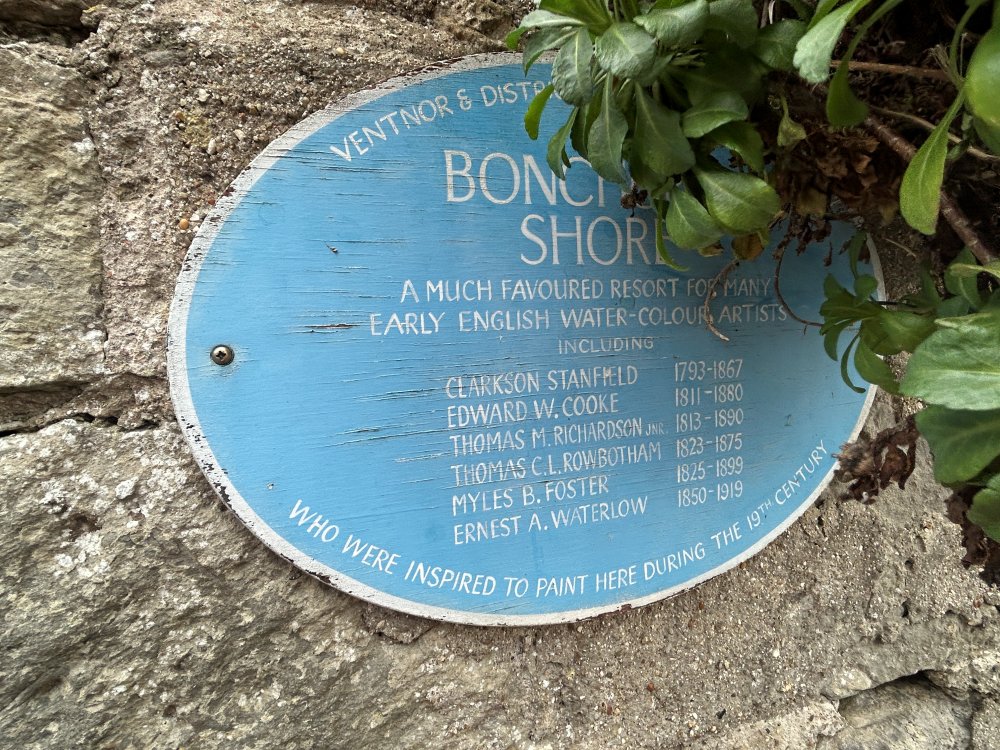
The natural beauty and dramatic landscapes of Bonchurch and Ventnor attracted numerous artists and writers. The colors of the cliffs at sunset, the serene waters, and the lush greenery provided endless inspiration.

Algernon Swinburne grew up at East Dene, and Bonchurch shaped him profoundly. The cliffs, the sea, and the wildness of the Undercliff fed directly into his poetry. He remained emotionally tied to the place all his life.
Famous figures such as Charles Dickens and the poet Alfred, Lord Tennyson, frequented the area, drawn by its beauty and tranquility. These individuals reflected the unique atmosphere and character of Bonchurch and Ventnor in their writing, contributing to the area’s cultural legacy.
Thomas Carlyle visited Bonchurch in the 1840s and wrote about its “strange, silent beauty.” He was part of the intellectual circle that gathered around the village during its peak.
The island is known to have offered a refuge to Emperor Haile Selassie, who found solace in its serene landscapes during turbulent times. Haile Selassie 1891 -1975
Haile Selassie, Emperor of Ethiopia holidayed in Ventnor in 1938, specifically at the Royal Marine Hotel [1] (sometimes referred to in sources as the “Marine Hotel, Ventnor”). The hotel was well‑known at the time for its sea views and quiet setting, exactly the sort of place chosen for dignitaries who needed privacy. Local accounts describe him walking along the Esplanade and being recognised by islanders who followed the news of the Italian invasion of his country.
The vibrant natural surroundings, with their lush greenery and spectacular coastal views, inspired many artists and writers to capture the essence of this picturesque locale in their works. The rich history and artistic connection continue to attract visitors from around the world, eager to experience the charm that once captivated such renowned personalities.
A Haven for Artists and Royals
Influential Residents
As a retreat for both artists and royals, Bonchurch and Ventnor have a storied past. In addition to Dickens and Tennyson, other notable figures, including the painter J.M.W. Turner, found inspiration in the region. Turner’s landscapes often featured dramatic skies and seaside vistas, echoing the beauty found on the Isle of Wight. Lord Macaulay also stayed on the Island for the climate. Thomas Babington Macaulay (1800-1859), better known as Lord Macaulay, was a 19th‑century British historian, essayist, and Whig politician whose influence stretched from Westminster to colonial India. His legacy is a mixture of literary brilliance, political achievement, and deep controversy.

The royal connection further solidified the area’s reputation as a premier destination for the aristocracy and other elite travellers. Queen Victoria herself visited the Isle of Wight multiple times, and during her stays, she cherished the picturesque landscapes and serene beaches that the island offered. The Queen Empress not only spent time at her own estate, Osborne House, located in nearby East Cowes, but also enjoyed leisurely strolls through its beautifully landscaped gardens, which were meticulously designed to reflect her personal taste. Royal patronage attracted other affluent visitors, spurring exponential growth in hotels and amenities designed for leisure, including exclusive dining establishments and luxurious spas. Queen Victoria’s diaries make reference to her travels around the island, providing fascinating insights into her experiences and the local culture, further enhancing the allure of the Isle of Wight as a sought-after retreat for those seeking both relaxation and royal charm.
Cultural Impact
The area’s rich tapestry of history continues to resonate today. Galleries, pop-up art exhibitions, and literary festivals celebrate the creative spirits drawn to Bonchurch and Ventnor. The artistic community remains vibrant, offering workshops and events that foster new talent while honoring the legacy of those who came before.
Ventnor Carnival has a character all its own. Now more than 135 years old, it stands as the second‑oldest carnival in the UK, and that sense of longevity gives it a quiet authority. The setting does half the work: a steep Victorian town rising in terraces above the sea, creating a natural amphitheatre where colour and sound seem to gather and echo. Everything is community‑driven , organised by volunteers, sustained by local pride, and shaped by the town’s instinct for doing things its own way.
Over the course of Carnival Week, Ventnor stages several parades, from the children’s procession to the main evening event and the much‑loved illuminated parade after dark. The result is a blend of tradition and eccentricity that feels unmistakably Ventnor: warm, slightly offbeat, and entirely itself
Conclusion

Bonchurch and Ventnor are more than just a coastal village and the nearby town; they hold a wealth of history, culture, and natural beauty that captivates visitors year-round. The Victorian settlement transformed these quaint locales into a vibrant hub for artists, writers, and the elite seeking repose by the sea, where the rolling waves and picturesque cliffs provided endless inspiration.
Despite the challenges posed by landslips and other natural elements, the charm of the landscape, along with the warm, welcoming community spirit, continues to thrive, making it a perfect destination for those looking to escape the hustle and bustle of modern life. The rich artistic heritage is evident in the galleries and studios that pepper the area, showcasing local talent and creativity. They do face challenges, and the smell of hash is sometimes evident as you walk around, but this is no more than any other British seaside town, where eclectic experiences and diverse atmospheres are part of the charm, inviting both locals and tourists to explore, enjoy, and appreciate the unique blend of history and contemporary life found in these coastal gems.
The legacy of Bonchurch and Ventnor is a blend of natural grandeur and human history. Their continued attraction speaks volumes about their place in the artistic and cultural heritage of the Isle of Wight, ensuring they remain pivotal points of interest for generations to come.


![1]](https://www.akpool.de/thumbnail/ba/98/94/1769035655/11513962_800x800.jpg?ts=1769035708)
Summary
Key Points:
- Location: Bonchurch and Ventnor are on the southern coast of the Isle of Wight.
- Victorian Era: This period saw rapid development and an influx of affluent visitors, leading to architectural growth due to the proximity of the Queen Empress at Osborne.
- Natural Challenges: Landslips pose risks to the landscape, inspiring writers and artists to capture the area’s beauty.
- Cultural Heritage: Notable figures such as Charles Dickens and Alfred, Lord Tennyson.
Further reading:
- The Walk from Shanklin to Sandown Pier: History, Landscape and a Coast Under Pressure
- Ryde to Seaview: A Coastal Walk. Beauty, Curiosities, and Contradictions
- A Walk From Ventnor Park to Old St Lawrence Church

My thanks to Gallica, the digital library of the Bibliothèque nationale de France, whose collections continue to make rare material accessible to researchers and independent writers. Their commitment to preservation and open access has been invaluable in helping me trace sources, verify details and explore the wider historical context behind this work.