Perched between sea and undercliff, Ventnor has always lived at the edge – geographically and imaginatively. Its story is one of reinvention, resilience and the shifting fortunes of a Victorian dream.
Ventnor: History and Landscape of an Isle of Wight Town
This article forms part of The Isle of Wight Project, a wider exploration of the island’s history, landscapes, and cultural memory. It sits within a connected cluster of pages that trace how local stories, sites, and traditions shape the character of the Isle of Wight, linking this topic to the project’s central pillar for context and depth.
Ventnor sits on the southern coast of the Isle of Wight, looking out across the English Channel from one of the most distinctive landscapes in southern England, characterized by its stunning cliffs, lush greenery, and unique microclimate that allows for the growth of subtropical plants. The history of the Isle of Wight is complicated and more recently we see a link to an attempted invasion of the Isle of Wight by the French in 1377 followed by a further invasion of the Isle of Wight n 1548 and Spanish Armada sailing past the coastline considering a landing. Bonchurch and Monks Bay feature heavily in those engagements.
The revetment walk from Bonchurch to Ventnor resembles the revetment walk from Shanklin to Sandown which is worthy of a vosot.
The town lies within the Undercliff [1]. a long stretch of slipped ground that runs from Luccombe to Blackgang, where visitors can enjoy picturesque coastal walks, explore local shops, and experience a vibrant community spirit that defines this charming seaside destination. Local wildlife includes rare butterflies.
Ventnor is well-known for its sandy beach, the historic Ventnor Botanical Gardens, and various annual events that attract tourists and locals alike, offering a delightful blend of natural beauty and cultural richness.
In writing about Ventnor I write about the lower town. what was sometimes called “Down Shute” by older residents. The higher part on the hill is referred to as Upper Ventnor (officially Lowtherville) and I have to say that we’re not writing about Ventnor City in the USA The internet can confuse the two places.
This unusual setting, created by thousands of years of earth movement, gives Ventnor its steep terraces, sheltered gardens and famous microclimate. Even in winter, the air feels softer than elsewhere on the Island, and palms, myrtle and other tender plants thrive in gardens that catch the sun. Then there are the Ventnor lizards in summer, a favourite when I visit the town in summer. There is a video at the end of this article showing the situation of Ventnor in the Undercliff.
Where is Ventnor?
Ventnor, on the southern coast of the Isle of Wight, England.
Early Ventnor: A Small Settlement Before the Victorian Boom
Ventnor had a population of 5,567, recorded in the 2021 UK Census, although in 1840 it was little more than a cluster of farmsteads, a watermill and a few fishermen’s cottages. Fewer than one hundred residents lived here.
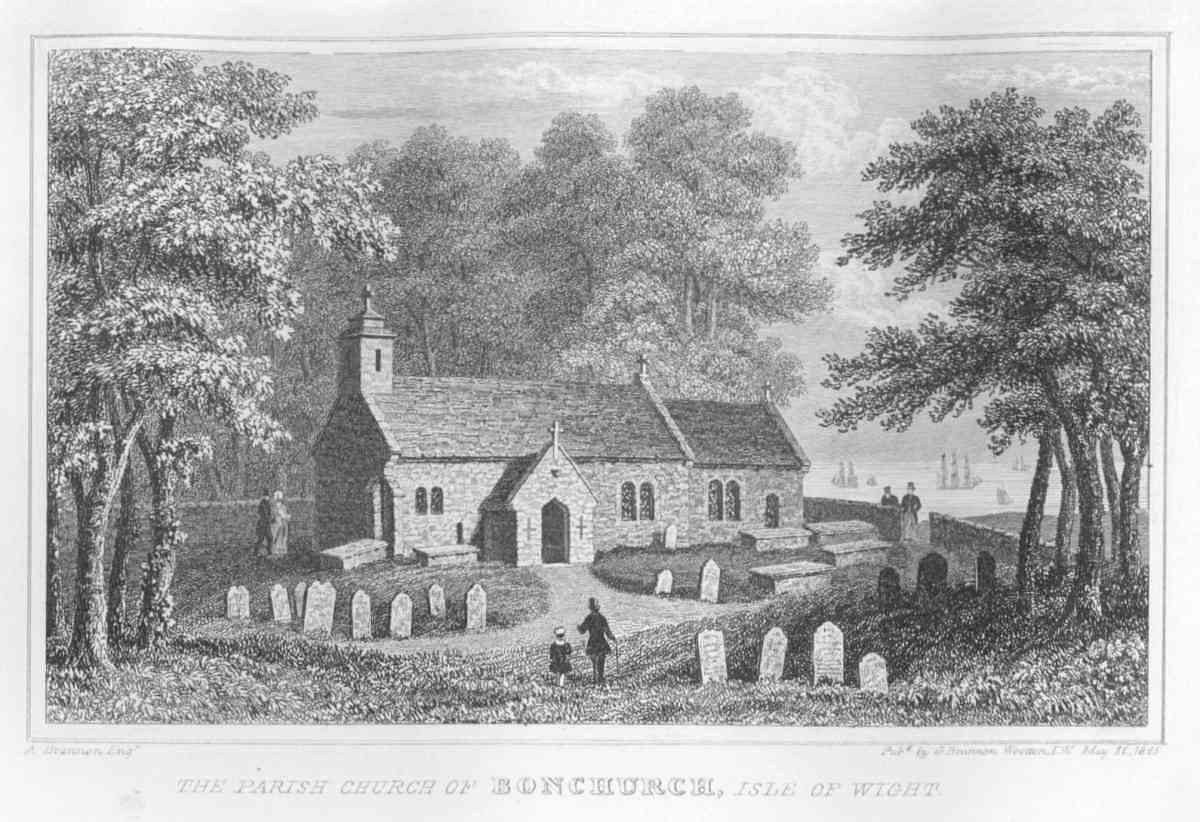
Bonchurch, just to the east, was the older settlement, with its ancient Church of old St Boniface [1]and the spring that runs beside the churchyard wall. The site has been a place of worship since at least the seventh century, and prehistoric finds in the wider area suggest that people valued this landscape long before written history.
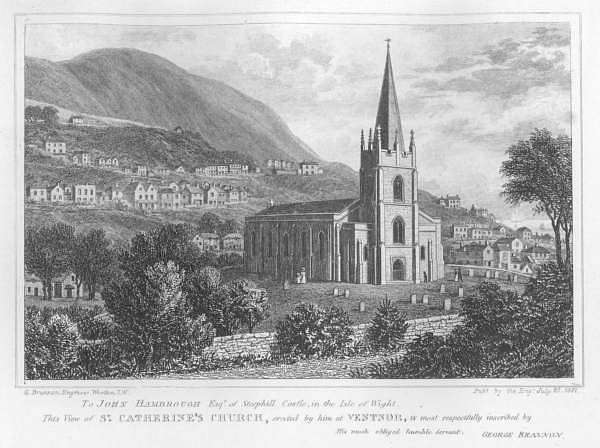
Ventnor itself was waiting to be discovered, and that discovery came late in British terms. Building of the parish church, Saint Catherine‘s, only commenced in 1837, designed by the architect Robert Ebbels. Many of the new residents of the growing town came from the nearby villages of Niton, Whitwell and Chale.
Project Gutenburg contains a few books from the Nineteenth and Twentieth Centuries that details the landscape and tourist potential for the genteel visitor from the mainland.
Ventnor’s Climate and the Rise of the Health Resort
Doctors began to praise Ventnor’s weather and pleasant climate for its supposed healing properties [1]. Tuberculosis was widespread, and many believed that sea air, warmth and shelter could ease the symptoms. Ventnor’s position beneath St Boniface Down, the highest point on the Isle of Wight at 241 metres, created a natural amphitheatre that trapped warmth and protected the town from cold winds.
By the 1830s and 1840s, visitors were arriving in growing numbers. Villas, boarding houses and small hotels appeared along the slopes, and Ventnor began its transformation from rural backwater to fashionable health resort. Development was rapid after the 1840’s with rapid building works every where.
If you’re trying to locate the The Royal National Hospital for Diseases of the Chest. on modern maps you’ll need to search for the Ventnor botanic garden which is on the site of the demolished hospital.
Royal Visitors to Ventnor and Literary Connections

The town’s reputation grew quickly. Charles Dickens stayed at Winterbourne in Bonchurch (1849) while working on David Copperfield, and he wrote warmly of the area’s beauty. Princess Victoria visited the Undercliff as a child, and her affection for the Island later led to the building of Osborne House in East Cowes.Steephill, the estate west of Ventnor only available by foot, became a favourite retreat for distinguished guests, and its gardens were often praised in Victorian travel accounts. there are some beautiful pictures of the Island in the twentieth century. There are numerous postcards [1] [2] [3] [4] in collections that show Ventnor as a prime tourist centre based on health tourism.
Queen Victoria, from her home at Osborne House, visited Ventnor and what became The Royal Hotel and afterwards giving the town that little buzz of royal glitz and glamour.
From a French language newspaper published in Algeria in 1903,. We can see the attraction of Ventnor for royal visitors reported in French language newspapers as far away as North Africa..
“The departure of the Princess of Saxony for Ventnor, where she arrived yesterday, was decided at the request of the Grand Duke and Grand Duchess of Tuscany. (…) The princess will remain in Ventnor until next April, and it is quite possible that her mother will join her at that time. (…) A rather curious coincidence: six years ago, the Princess of Saxony spent a fortnight in Ventnor accompanied by her husband, the Crown Prince of Saxony.” La Vigie algérienne,
29 novembre 1903, p. 2. Available via Gallica (Bibliothèque nationale de France)
By the mid nineteenth century, Ventnor had become a place where royalty and the wealthy came to recover their health, enjoy the scenery and escape the pressures of London. Tea shops thrived in Ventnor.
The Railway to Ventnor and Victorian Expansion
The Isle of Wight Central Railway (arrived in 1866, linking Ventnor to Shanklin, Ryde and the mainland. The station, perched high above the town, required a steep climb or a carriage ride, but the connection transformed local life. Tourists could now reach a ‘Victorian Ventnor‘ with ease, and the town’s economy flourished. Hotels expanded, new terraces were built and the esplanade developed into a lively promenade.


The railway remained central to Ventnor’s identity until its closure in 1966 as part of the Beeching cuts. Many residents still speak of the loss with regret, as it marked the end of a defining era.
The Revetment Walk and the Coastal Landscape
One of Ventnor’s most loved features is the Revetment Walk, the coastal path linking Bonchurch to Ventnor, similar to the walk from Shanklin to Sandown.. Built in stages during the nineteenth century, it runs beneath the cliffs and offers changing views of the sea. The walk passes Monks Bay, a small shingle beach with a long history of smuggling and shipwrecks, and continues towards Horseshoe Bay and the eastern end of Ventnor.
For generations, this path has been a favourite for residents and visitors, a place for quiet reflection or a gentle stroll on a summer evening.
Ventnor Pulmonary Hospital
Ventnor’s role as a health resort reached its peak with the Royal National Hospital for Diseases of the Chest. Built in the late nineteenth century on the slopes above Steephill Cove, it treated patients with tuberculosis from across Britain. The hospital’s terraces, airing huts and gardens were designed to maximise exposure to fresh air and sunlight.
The hospital closed in the twentieth century as medical treatments improved, and the buildings were eventually demolished. Its legacy, however, remains an important part of the town’s story.
Ventnor’s heyday
Ventnor’s heyday reached its height in Edwardian times, yet the town’s popularity didn’t fade with the new century. Through the 1920s and 1930s, more and more visitors arrived each summer, drawn by the promise of long sunny days, the sweep of Ventnor Beach and the elegance of the Esplanade with its shelters, gardens and neat rows of deckchairs.
Ventnor Pier, rebuilt in 1895 after storm damage, remained one of the town’s great attractions. It offered concerts, tearooms and the simple pleasure of walking out over the water to watch steamers arriving from Portsmouth and Southampton. Hotels were thriving [1]. By the interwar years, the Pier Pavilion was hosting dances, variety acts and orchestras that filled the warm evenings with music.

Ventnor Beach
Ventnor Beach is the southernmost holiday beach on the Isle of Wight, offering a Mediterranean feel. The bay lies below the steep Victorian town, with red shingle and golden sand shining in the sun. Children enjoy collecting tiny pebbles and sea glass.
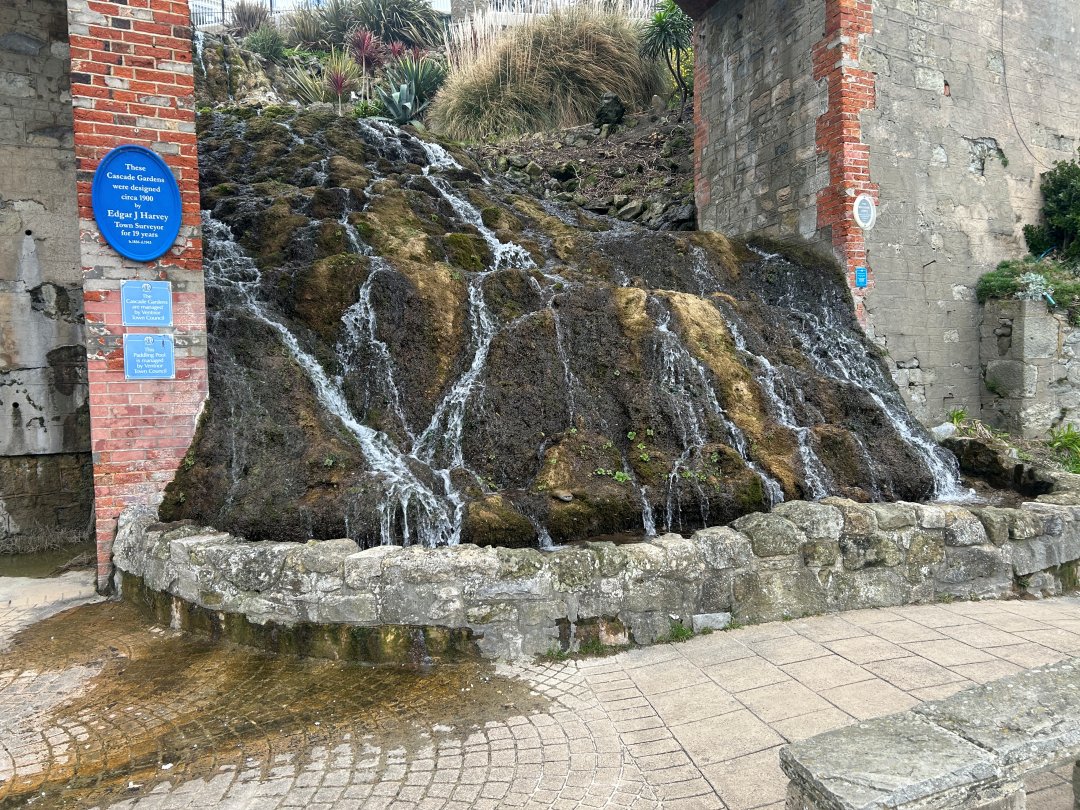
The Cascade road leads down to the seafront, featuring a lookout that provides full views of the bay. To the left is the small Ventnor haven. It’s pleasant looking back at the beach and the Cascade. Local fishermen use the short pier in the haven, and a shop nearby sells fresh seafood.



At the base of the Cascade is the Isle of Wight paddling pool, a large map of the Island that has entertained children for over a hundred years although it seems in need of a makeover. Café nearby offers meals and snacks as they have done for many years. The beach has a pebbly surface, so wearing sea shoes is helpful, but it’s a great spot for relaxing days in the sun. The esplanade has cafés, restaurants, and pubs that extend toward the sea. With the town on the cliffs behind and sunlight reflecting on the water, Ventnor feels like a small Mediterranean resort rather than an English seaside town. Southern Water has been criticised for water quality so best check that before sea bathing.
A stroll along the front gives you everything you want from a beach holiday. Ice creams, eateries, a beach shop, more cafés and, at the far end, the famous Spyglass Inn with its nautical interior and terraces overlooking the bay. Families are well catered for with public toilets and baby‑changing facilities. Water sports are not advised because of hidden rocks.
Time and Tides at Ventnor
Ventnor has steady south‑coast tides that shape the beach throughout the day. Ventnor Bay sees two high tides and two low tides every 24 hours, with the sea rising to around four metres at high water and dropping to about a metre at low.
At high tide the beach becomes narrow and the water often reaches the shingle bank, which gives the bay a dramatic, almost Mediterranean look. As the tide falls, more of the red shingle appears, along with the tiny pebbles and bits of sea glass that Ventnor is known for. The cliffs shelter the bay, so the water warms quickly and the whole seafront becomes a real sun trap. The tide can move in fast, especially on spring tides, and hidden rocks. So, remain aware.
The Ventnor Winter Gardens
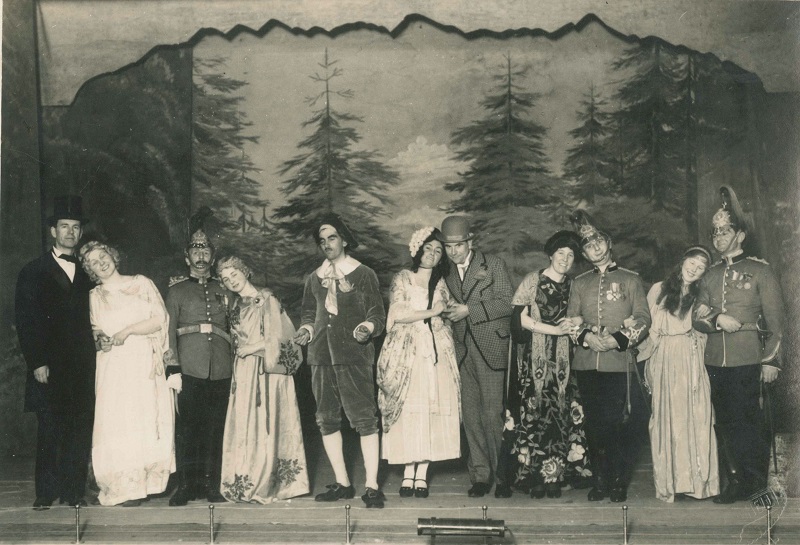
The opening of the Ventnor Winter Gardens in 1937 on the site of a demolished Vicarage, added a new centrepiece to Ventnor’s social life. The new venue quickly became a favourite for both residents and holidaymakers. Its art deco lines, large auditorium and sea views made it an ideal setting for theatre productions, dances, lectures and civic events. Touring companies from London performed there, and local groups such as the Ventnor Operatic and Dramatic Society used the stage for their own productions. On summer nights, the building glowed above the Esplanade, a symbol of the town’s confidence and its belief in a bright future although it is now in a sorry state.
Families came from across Britain, many arriving by train at Ventnor Station high above the town before making their way down to the seafront. Guesthouses along Belgrave Road, Bath Road and Madeira Road were often fully booked from Whitsun to September. Shops along the High Street and Pier Street thrived, selling everything from postcards and buckets and spades to handmade chocolates and Island rock. Cafes such as the ones near the Ventnor Cascade Gardens served teas, ices and light lunches to a steady stream of visitors. The town felt lively and prosperous, and for many people Ventnor became a cherished part of their annual holiday. Regrettably, modern funding of such venues hasn’t kept pace with Edwardian times and the tourist offering has declined considerably in quality.
Second World War in Ventnor
This sense of ease and optimism didn’t last. The approach of the Second World War cast a long shadow over the south coast, and Ventnor’s strategic position made it far more vulnerable than many realised. In the late 1930s, an early radar station was established on St Boniface Down as part of the Chain Home network. Known officially as RAF Ventnor, the site became operational in 1938 and played a crucial role in detecting enemy aircraft approaching the Channel. Its importance meant that Ventnor was no longer simply a peaceful seaside resort. It was now a military target.
When war broke out in 1939, the town’s atmosphere changed almost overnight and the Ventnor Pier owned by the Ventnor Pier & Esplanade Co. was was closed to the public. Parts of the Esplanade were fortified. The radar station on the Down drew the attention of the Luftwaffe, and Ventnor suffered several bombing raids during the Battle of Britain and the Blitz. On 1 August 1940, the radar station was heavily attacked, causing significant damage and temporarily knocking it out of action. Houses in the town were hit in later raids, and residents took shelter wherever they could, often in the railway tunnel or in makeshift shelters dug into gardens.

A blue plaque marking the site of the Royal Marine Hotel [1] “A casualty of War”. © Limentinus, released under Creative Commons CC BY 4.0. Free to use with attribution
The Ventnor Wartime Experience
The once carefree rhythm of summer holidays gave way to blackouts, air raid sirens and the constant awareness that the war was close at hand. Many guesthouses closed or were requisitioned for military use. Children were evacuated, and local businesses struggled as tourism collapsed. The Ventnor Winter Gardens, which had opened with such optimism only a few years earlier, found itself hosting wartime events, morale‑boosting concerts and gatherings for service personnel rather than carefree holidaymakers.
Ventnor’s transformation during these years was profound. A town that had built its identity on sunshine, health and leisure found itself facing the harsh realities of conflict. The community endured, and the same resilience that had shaped Ventnor’s growth in the nineteenth century helped it survive the trials of the twentieth. The scars of the war remained visible for years and buildings were destroyed by bombing.
Modern Ventnor: Challenges and Community Strength
Despite its beauty and rich heritage, Ventnor faces modern challenges. The town has some of the highest levels of deprivation on the Isle of Wight, with limited employment opportunities and a shortage of affordable housing. The geography that once made Ventnor so attractive also creates difficulties. The Undercliff is prone to movement, and landslips have shaped the area for centuries.

The Leeson Road landslip of December 2023 was a stark reminder of this instability. Homes were evacuated, roads were closed and large sections of land shifted overnight. The event disrupted daily life and highlighted the ongoing need for careful management of the landscape.
Ventnor’s community spirit remains strong. The Ventnor Fringe Festival, founded in 2010, has become one of the Island’s most vibrant cultural events. Each summer, the hotels in Ventnor fill with guests and the town fills with music, theatre, art installations. Performances in unexpected places. Local history societies continue to collect stories, photographs and artefacts, ensuring that the town’s past is not forgotten.
Ventnor beach is a place for families although it shelves steeply away and the ‘sand’ can be a little sharp without a towel or similar
What Makes Ventnor Special Today
Ventnor’s appeal lies in the way Ventnor history and the landscape of Ventnor intertwine. Victorian villas stand beside modern homes, steep steps lead to hidden gardens and sea views, and the town’s people carry a sense of pride in a place that has weathered both triumph and hardship. There are increasingly things to do in Ventnor for families. The genealogy of Ventnor and the wider Isle of Wight is fascinating and something to be explored.
Ventnor is a town shaped by its landscape, enriched by its past and sustained by the strength of its community. Its story is one of resilience, adaptation and quiet determination, and it continues to attract those who appreciate its beauty, its history and its unmistakable character.

The twentieth century tested that resolve. War caused destruction, and the years after the war took away some institutions from he town, like the railway line and the tuberculosis hospital, which once represented a resort focused on recovery. Ventnor remained intact and was home to interesting characters like Olivia Parkes (The Old Lady of the Sea), who is remembered in local stories, though anyone who remembers her is likely in their eighties or older.
Post War Ventnor adapted. The town found other ways to express itself and find a voice. The Ventnor fringe is perhaps the clearest example of that instinct: a community choosing creativity, collaboration and local pride over decline and Winterbourne Country House and similar hotels continue to bring people to Island to enjoy it’s experiences as they did in Victorian times although Ventnor accommodation now comes in all shapes sizes and prices, from traditional B&B to small apartments to the The Hambrough.
Ventnor’s story is never a straight line; it’s a long, shifting coastline of its own. The place was almost certainly known in Roman times, though only in the vaguest outline, a presence rather than a settlement, a name without a map. For centuries afterwards it remained a scatter of homesteads clinging to the Undercliff, small, self‑contained and shaped more by landscape than by ambition. Everything changed after the 1840s. The arrival of incomers and “overners” from the mainland brought new trades, new expectations and new ways of living, all of which show up so clearly in the census returns. Ventnor became a town because people chose it, invested in it and, in many cases, came here to begin again.
Further reading:
- The Walk from Shanklin to Sandown Pier: History, Landscape and a Coast Under Pressure
- Ryde to Seaview: A Coastal Walk. Beauty, Curiosities, and Contradictions
- A Walk From Ventnor Park to Old St Lawrence Church
A video showing Ventnor in the Undercliff
Ventnor’s character comes from its geography. The town clings to the side of the Undercliff, a landscape unlike anywhere else in Britain. Its steep terraces, sheltered microclimate, and Victorian architecture give it a personality that feels slightly out of step with the rest of the island. This isolation has shaped everything: the people who settle here, the businesses that survive, and the rhythm of life that swings between a lively summer and a quieter, more introspective winter.
Ventnor’s economy leans heavily on tourism, and the town transforms with the weather. In summer, the beach, cafés, and coastal paths are full, and the town feels almost Mediterranean. When the season ends, the pace drops sharply. Some businesses reduce hours, visitor numbers fall, and the town returns to its slower, more reflective winter state. This seasonality isn’t new, it’s been part of Ventnor’s identity since the Victorian era, and it remains one of the defining features of life here
Ventnor’s beauty and uniqueness come with practical difficulties. The steep landscape limits new building and makes infrastructure expensive to maintain. Local businesses depend on a stable year‑round population, although many struggle to find staff because workers often can’t afford to live nearby or commute easily. The town’s economy is a delicate balance of tourism, independent shops, care work, hospitality, and small services all of which rely on people who can live and work locally. Ventnor’s future depends on keeping that balance intact.